
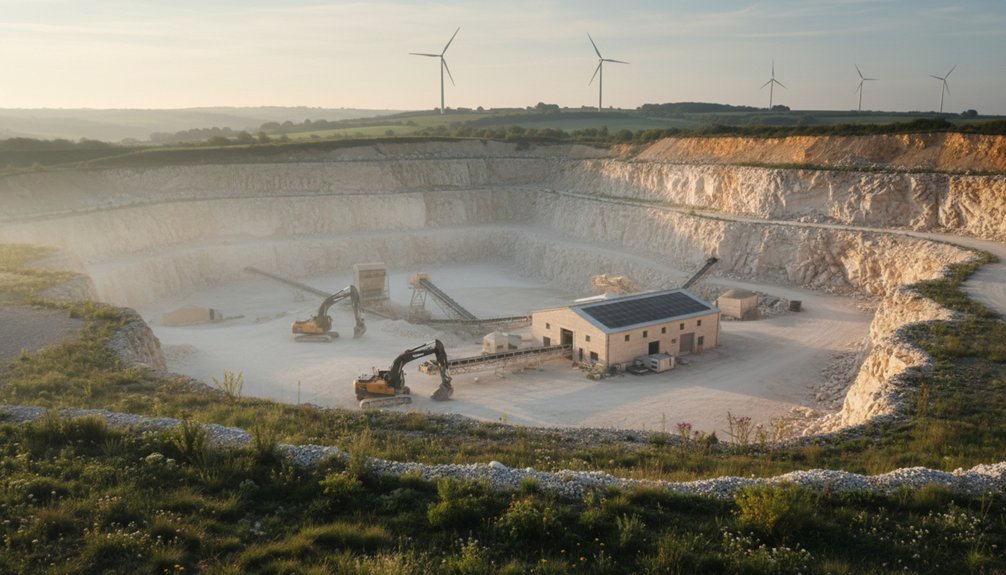
Quarrying contributes roughly 4% of global carbon dioxide emissions, so you can see why British operators are tightening every stage of production. They’re measuring energy use, electrifying mobile plant, sourcing renewable power, and using digital route planning to cut fuel demand. Restoration then helps rebuild soils, habitats, and carbon stores. But which interventions deliver the greatest reductions, and how can operators verify those gains across an entire site?
Key Takeaways
- British quarries measure emissions from fuel, electricity, explosives, transport, and materials to target effective carbon reductions.
- Electric machinery, renewable energy, battery storage, and smart controls reduce diesel use, operational emissions, noise, and maintenance costs.
- Digital routing, efficient stockpile placement, driver training, and vehicle maintenance cut haulage distances, idling, fuel consumption, and emissions.
- Recycled aggregates and energy-efficient crushing and screening reduce embedded carbon while improving resource efficiency and controlling costs.
- Progressive restoration using native species, wetlands, and improved soils stores carbon, strengthens biodiversity, and increases ecological resilience.
Why British Quarries Need to Cut Carbon
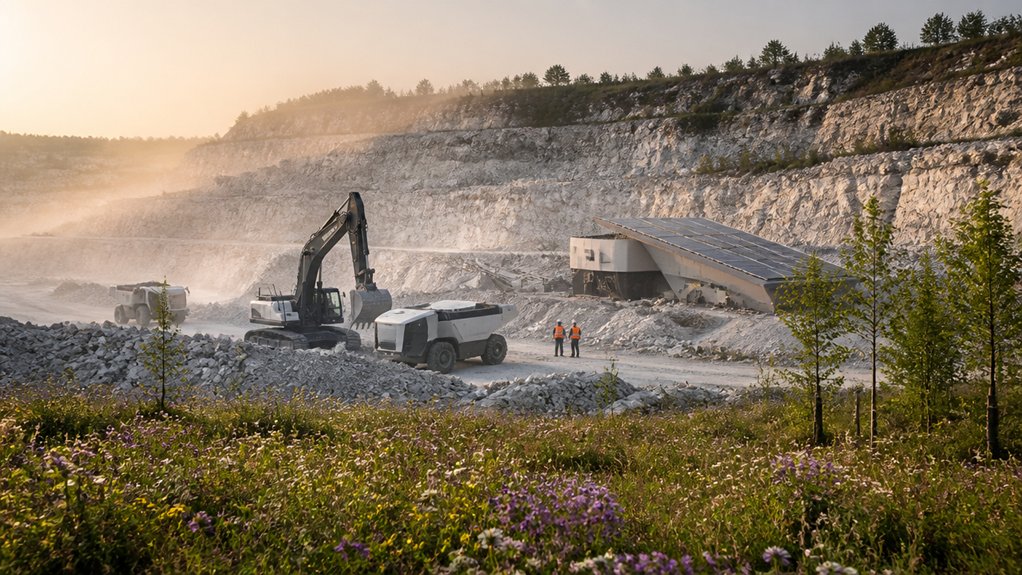
British quarries need to cut carbon because extraction, crushing, screening and haulage consume substantial energy and generate significant greenhouse-gas emissions. You also face rising expectations from regulators, customers and local communities to supply essential aggregates with lower environmental impact.
Historical quarrying often relied on energy-intensive equipment, diesel fleets and linear production practices, leaving substantial opportunities for improvement. By reducing carbon, you can strengthen operational efficiency, control fuel exposure and maintain access to infrastructure markets that increasingly specify environmental performance.
Quarrying innovations now support electric and hybrid mobile plant, renewable power, conveyor transport, recycled aggregates and smarter processing systems. These measures can reduce dependence on fossil fuels while preserving output, safety and material quality.
Cutting emissions also helps you protect habitats, improve community relationships and build a resilient, competitive business for Britain’s future.
How Quarries Measure Carbon Emissions
You’ll need accurate emissions data from fuel use, electricity, extraction, processing, transport, and blasting activities.
You can then apply recognised carbon-accounting methods to quantify direct and indirect emissions across the quarry’s operations.
This carbon-footprint assessment identifies major sources and supports targeted reduction plans.
Emissions Data Collection
Quarries measure carbon emissions by collecting activity data from fuel use, electricity consumption, explosives, transport, and purchased materials, then applying recognised emissions factors to calculate their greenhouse-gas footprint. You’ll improve data accuracy by installing calibrated fuel meters, recording electricity invoices, and logging equipment hours, payloads, haulage distances, and blast quantities.
Assign clear responsibilities so operators capture readings consistently and supervisors verify unusual results before submission. Digital systems can link weighbridge records, maintenance logs, procurement data, and energy bills, reducing manual errors and missing entries.
You’ll also document estimation methods where direct measurements aren’t available, retaining evidence for audits. Aligning your process with recognised reporting standards, such as the GHG Protocol and UK industry guidance, makes disclosures comparable.
Regular reviews help you correct gaps and strengthen future data collection.
Carbon Footprint Assessment
Once you’ve assembled verified activity data, you can assess the quarry’s carbon footprint by converting each emission source into tonnes of carbon dioxide equivalent (tCO₂e). Apply appropriate UK Government emission factors to diesel, electricity, explosives, refrigerants, and purchased materials.
For mobile plant, multiply fuel consumption by its factor; for grid power, use the relevant location-based factor and disclose any market-based claims. Classify results as Scope 1, Scope 2, or Scope 3, then separate operational emissions from embedded carbon in products and infrastructure.
Your assessment should document boundaries, assumptions, calculation methods, data quality, and reporting year, allowing consistent comparison over time. Use the baseline to identify high-impact processes, set measurable emission reduction targets, and prioritise electrification, efficiency, renewable power, and responsible carbon offsetting only for residual emissions.
How Electric Machinery Cuts Quarry Emissions
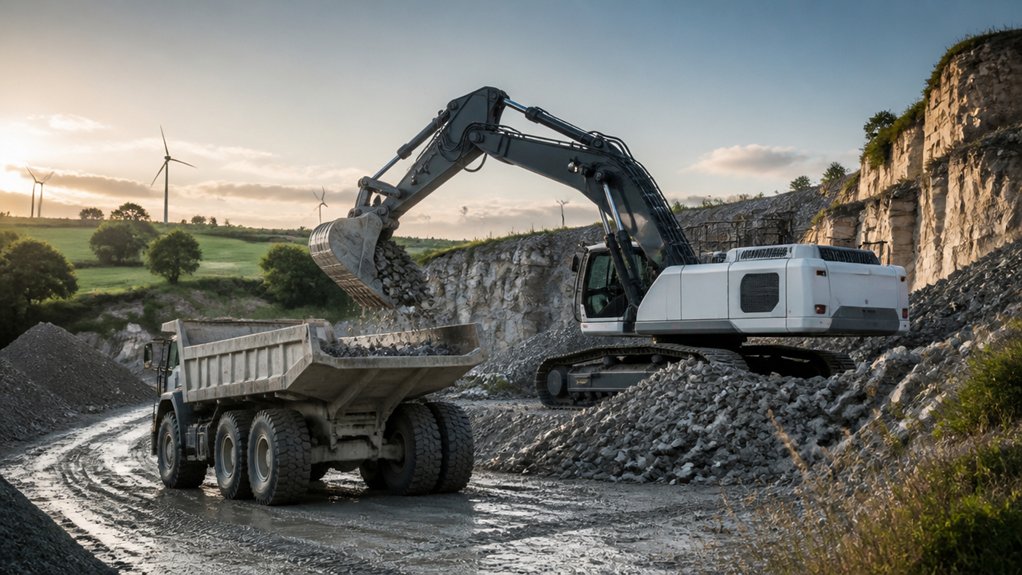
Electrifying excavators, loaders, and haul trucks can cut quarry emissions by replacing diesel combustion with high-efficiency electric drivetrains powered by increasingly renewable grids. When you deploy electric machinery, you eliminate tailpipe exhaust, reduce idling losses, and improve energy efficiency across extraction, loading, and material transport.
Battery technology now supports higher capacities, rapid charging, and demanding duty cycles, although you’ll need to match equipment specifications with haul distances, payloads, gradients, and operating schedules. Electric motors deliver instant torque and precise control, helping you reduce maintenance, fuel handling, and downtime.
You’ll also lower noise pollution, improving conditions for workers and nearby communities while supporting compliance with planning requirements. Monitor electricity use, charging performance, and equipment utilisation to verify carbon savings and guide future fleet investment.
Moreover, regenerative braking can recover energy during downhill haulage.
How Renewable Energy Powers British Quarries
Renewable energy can power British quarries through on-site solar arrays, wind turbines, battery storage, and certified renewable electricity contracts, reducing the carbon intensity of electric machinery, crushing, screening, and site buildings.
You can strengthen renewable integration by matching generation profiles with operational demand, using smart controls to schedule energy-intensive processes during periods of high output.
Energy storage systems capture surplus electricity and release it during peak loads, grid constraints, or low-generation periods, improving resilience and reducing reliance on carbon-intensive power.
You can combine battery systems with metering, forecasting, and power-management software to verify performance and control costs.
Where on-site generation remains limited, you can procure traceable renewable electricity through credible contracts, supporting additional capacity while lowering measured Scope 2 emissions.
Regular monitoring helps you identify further efficiency opportunities.
How Smarter Transport Reduces Quarry Emissions
Smarter transport can cut quarry emissions by reducing haul distances, idle time, fuel use, and unnecessary vehicle movements. You can apply logistics optimization to match extraction schedules with processing capacity, delivery windows, and vehicle availability.
Digital dispatch systems, GPS tracking, and weighbridge data help you plan efficient routes, avoid congestion, and prevent part-loaded journeys. By positioning stockpiles strategically, you’ll reduce rehandling and shorten internal haul cycles.
Regular maintenance keeps engines, tyres, and hydraulic systems operating efficiently, while driver training supports smooth acceleration, correct gear selection, and safe speed control.
You can also use telematics to identify idling, excessive braking, and inefficient routes, then target corrective action. These measures improve fuel efficiency and lower operating costs without compromising production, safety, or reliable customer deliveries across the wider supply chain.
How Quarry Restoration Supports Nature and Climate Goals
Once extraction ends, quarry restoration can turn disturbed land into a long-term asset for biodiversity, flood management, and carbon reduction. You can shape final landforms to improve drainage, stabilise slopes, and create wetlands, grasslands, woodlands, or habitat mosaics suited to local conditions.
Using native species and locally sourced soils strengthens ecological resilience while reducing transport-related emissions. Careful restoration planning also enables progressive rehabilitation, so you don’t leave all environmental work until closure.
Biodiversity enhancement can support pollinators, protected species, and connected ecological networks, while restored peatland or woodland stores carbon over time.
Through Community engagement, you can align restoration with public access, recreation, and local priorities.
Monitoring vegetation establishment, water quality, soil carbon, and species recovery verifies performance and guides adaptive management.
This approach delivers measurable climate and nature benefits beyond extraction.
Frequently Asked Questions
What Government Regulations Influence Carbon Reduction in British Quarrying?
You’ll encounter UK emissions reporting, permitting, energy-efficiency standards, landfill-tax rules, and planning requirements; Regulatory incentives support electrification, while renewable mandates and carbon pricing encourage lower fuel consumption, cleaner power, and verified quarry decarbonisation.
How Much Does Quarry Decarbonisation Typically Cost Operators?
You’ll find no universal figure: quarry decarbonisation typically costs hundreds of thousands to several million pounds, depending on electrification, Renewable energy, fleet upgrades, and emission monitoring; grants and efficiency savings can substantially reduce your outlay.
Which British Quarry Companies Have Achieved the Greatest Carbon Reductions?
You’ll find Tarmac, Aggregate Industries, and Hanson among Britain’s strongest carbon reducers, deploying Innovative technologies, electrification, and Renewable energy. Compare verified emissions data carefully, because company boundaries, baselines, and reporting periods differ substantially.
How Can Communities Participate in Local Quarry Sustainability Decisions?
You can transform community engagement into a million powerful voices by joining consultations, reviewing environmental-impact data, attending planning meetings, and submitting evidence. Your local decision making can influence mitigation, monitoring, restoration, and emissions commitments.
What Careers Are Emerging From Greener Quarrying Practices?
You’ll find careers in renewable-energy engineering, electrified equipment maintenance, environmental monitoring, and carbon accounting. Innovative techniques create demand for specialists, while worker training prepares operators to manage automation, efficiency systems, and restoration projects.
Conclusion
By cutting carbon across extraction, processing, transport and restoration, you can help British quarrying build a lower-impact future. Transport and mobile plant often represent major emissions sources, so electrification, renewable power and digitally optimised haulage deliver measurable gains. You’ll also see restoration convert worked land into valuable habitat, improving soils and carbon storage. With robust monitoring, you can verify progress against climate targets, protect biodiversity and keep essential mineral supply aligned with a resilient, net-zero economy.