
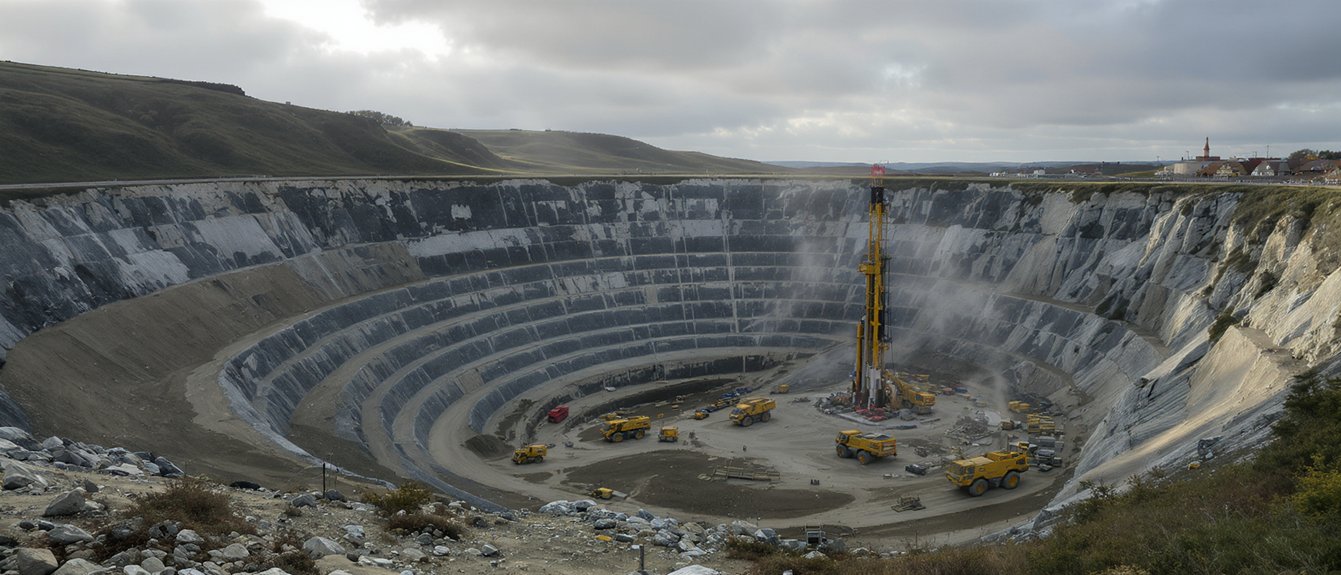
If you’re evaluating UK stone quarrying in 2026, you’ll find a market supported by infrastructure renewal, housing, and commercial construction, but limited by planning delays, energy costs, transport constraints, and tighter environmental obligations. You’ll need to weigh regional demand, recycled-material competition, automation, electrification, and restoration liabilities when judging margins. The essential question is whether project pipelines and higher-value products can offset rising operating costs through 2030.
Key Takeaways
- UK stone quarrying should experience moderate growth through 2030, driven by infrastructure renewal, housing, flood defenses, utilities, and commercial construction.
- Demand will vary regionally, with quarries near major projects benefiting from lower transport costs and remote sites facing freight disadvantages.
- Competition from recycled aggregates, imported stone, and engineered materials will pressure prices, increasing the importance of quality, traceability, and delivery speed.
- Planning, biodiversity, environmental permitting, carbon reporting, and safety requirements will raise compliance costs and extend development timelines.
- Electrification, automation, digital monitoring, workforce training, and improved extraction efficiency will support productivity, sustainability, and long-term industry resilience.
What Is the UK Quarrying Market Outlook for 2026?
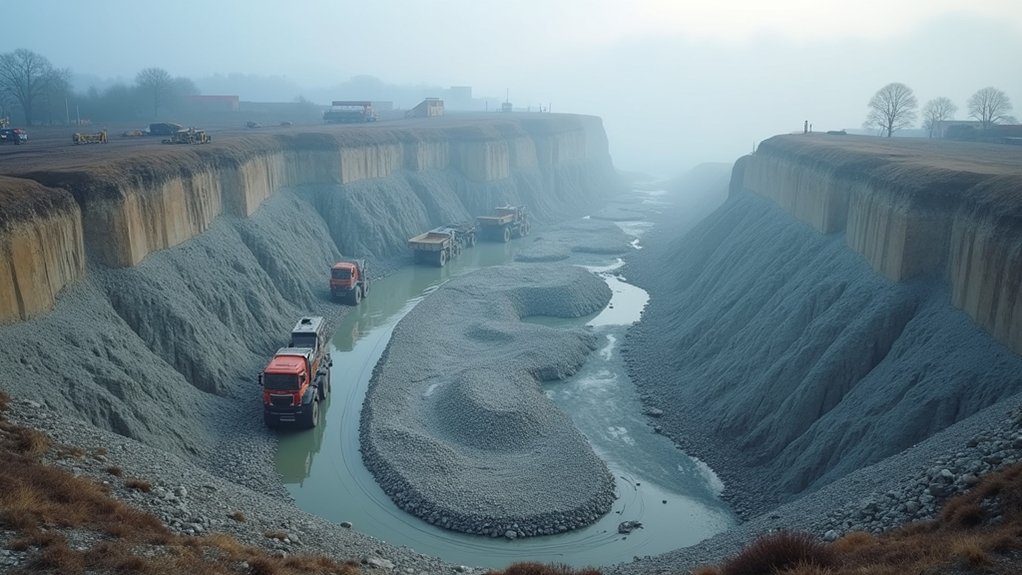
As the UK enters 2026, the quarrying market is expected to remain closely tied to infrastructure investment, housing construction, and commercial development rather than broad-based industrial growth. You’ll likely see demand remain uneven, with aggregate volumes reflecting project approvals, planning delays, interest rates, and regional construction pipelines.
Environmental regulations will continue shaping extraction capacity, restoration obligations, biodiversity assessments, carbon reporting, and transport controls. You’ll need to evaluate permitted reserves alongside compliance costs, energy exposure, and planning risk, because headline resource availability won’t guarantee output.
Technological innovations should improve crushing efficiency, automated sorting, predictive maintenance, dust suppression, and real-time quality monitoring. However, adoption will depend on capital availability and quarry scale.
Which Sectors Drive UK Quarry Demand?
You’ll find UK quarry demand anchored by construction materials, as housing, commercial development, and repair activity consume aggregates, dimension stone, and crushed rock.
Infrastructure project growth further increases requirements for specified-grade stone in rail, energy, utilities, and civil-engineering works.
Road-building programmes also sustain demand for asphalt aggregates, sub-base materials, and durable, compliant fill.
Construction Material Demand
Construction activity is the primary driver of UK quarry demand, with aggregates, crushed stone, and dimension stone supplying material for roads, housing, commercial buildings, utilities, and major civil-engineering projects. You’ll see demand vary by project type, specification, and regional development intensity.
Ready-mix concrete, asphalt, precast products, and block manufacturers consume graded primary aggregates, while builders’ merchants distribute smaller volumes for housing and repair work.
Dimension stone serves façades, paving, heritage restoration, and landscaping, creating higher-value niches alongside bulk products.
Environmental regulations increasingly influence extraction, processing, transport, and rehabilitation costs, encouraging efficient resource use and recycled-material substitution.
To protect margins, operators pursue Market diversification through manufactured aggregates, specialist stone, recycling services, and customer-specific grading.
Your assessment should consequently track construction output, material intensity, product mix, and local supply constraints.
Infrastructure Project Growth
Infrastructure investment is a major source of UK quarry demand, with highways, railways, airports, ports, water networks, energy projects, and flood-defence schemes requiring substantial volumes of aggregates, crushed rock, sand, and specialist fill.
You’ll see demand expand as governments and developers renew ageing assets, increase resilience, and deliver low-carbon infrastructure. Rail electrification, offshore wind fabrication, grid reinforcement, nuclear construction, reservoir upgrades, and wastewater treatment create diverse specifications, from durable ballast and armourstone to engineered drainage media.
Project phasing can produce regional surges, encouraging quarries to optimise reserves, mobile processing, and multimodal distribution. However, Mining regulations constrain extraction permissions, while the Environmental impact of blasting, dust, noise, habitat loss, and lorry movements influences planning outcomes.
You should thus assess infrastructure pipelines alongside permitting risk, recycled aggregate availability, and local capacity before forecasting quarry output or investment.
Road Building Requirements
Road building remains one of the largest and most specification-intensive sources of UK quarry demand, extending infrastructure-led requirements into highways, local roads, bypasses, junction upgrades, and maintenance programmes.
You’ll see demand centre on crushed rock, bituminous aggregates, sub-base, drainage stone, and recycled alternatives, with each application requiring controlled grading, durability, skid resistance, and low moisture sensitivity.
National Highways schemes typically impose rigorous testing for polished stone value, aggregate abrasion, and frost resistance, while local authorities balance performance against constrained budgets.
Your quarry’s proximity to projects directly affects delivered cost, because haulage can outweigh extraction economics for high-volume, lower-value material.
Maintenance cycles also sustain recurring orders as contractors resurface carriageways, repair potholes, and strengthen pavements.
Consequently, road surface specifications and paving materials selection strongly influence regional output, product investment, and quarry utilisation rates.
Who Competes With UK Stone Quarries?
UK stone quarries compete primarily with imported dimension stone, crushed-rock suppliers, recycled aggregates, and substitute materials such as concrete, brick, porcelain, and engineered stone. You’ll see international competitors influence prices through containerised granite, marble, and sandstone, particularly where overseas producers benefit from lower extraction or processing costs.
Domestic operators differentiate themselves through shorter supply chains, consistent grading, geological traceability, and faster delivery. Recycled aggregates challenge primary quarry output when specifications permit their use, while engineered products compete on uniformity, colour range, and installation efficiency.
You’ll also need to assess regulatory challenges: planning consent, biodiversity requirements, dust controls, blasting limits, carbon reporting, and restoration obligations can raise UK production costs. Quarry firms thus compete through resource quality, operational efficiency, compliance capability, and dependable technical support rather than price alone.
How Infrastructure Projects Will Affect Demand
As major transport, housing, energy, and flood-defence programmes advance, they’ll increase demand for UK-quarried crushed stone, aggregates, and specialist dimension stone. You’ll see motorway upgrades, rail improvements, housing estates, offshore-wind infrastructure, and coastal defences generate sustained requirements for certified materials.
Project schedules will shape regional demand: quarries near construction corridors can respond faster, while distant sites may face freight bottlenecks and supply chain disruptions. You’ll also need to monitor specification changes, as bridges, tunnels, drainage systems, and concrete structures require different grading, durability, and contamination controls.
Environmental regulations will influence which reserves developers can access and how quickly operators can expand extraction. Recycled aggregates will supplement primary stone, but major programmes will still require consistent volumes, especially where performance standards, embodied-carbon targets, and local sourcing policies limit substitution.
What Drives Quarry Costs and Profit Margins?
Quarry costs and profit margins depend on how efficiently operators convert permitted reserves into saleable stone while controlling energy, labour, maintenance, compliance, and distribution expenses. You’ll improve unit economics by maximising extraction yield, reducing overburden, and matching blasting, crushing, and screening capacity to customer specifications.
Fuel and electricity prices directly affect drilling, haulage, and processing costs, while equipment utilisation, downtime, and replacement cycles determine capital efficiency. You must also monitor labor costs, especially for skilled plant operators, drivers, engineers, and maintenance teams.
Product mix matters: aggregates typically generate steadier volume, whereas dimension stone can command higher prices but requires more selective extraction and finishing.
Environmental impact controls, restoration provisions, water management, and dust suppression add cost, yet efficient practices can reduce waste, protect operating continuity, and strengthen margins. Logistics ultimately determine delivered-price competitiveness.
Which Rules Are Reshaping UK Quarry Operations?
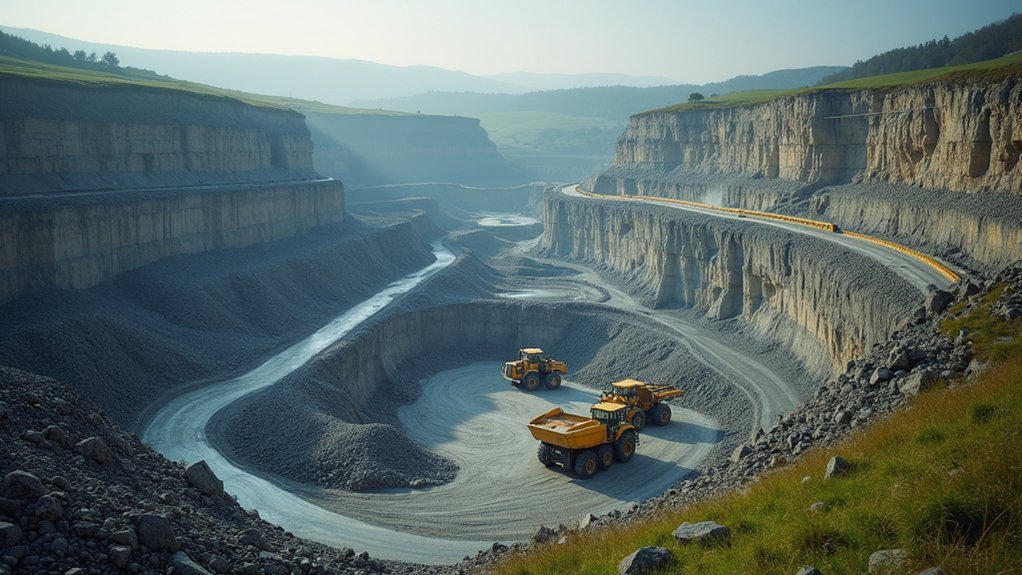
New planning, environmental, safety, and emissions requirements are reshaping how you develop and operate UK quarries. Regulatory changes require you to secure mineral planning permission, address biodiversity net gain, and demonstrate acceptable impacts on traffic, noise, dust, blasting, and landscape character.
Environmental policies also strengthen obligations under the Environmental Permitting regime, including controls on water discharge, contaminated runoff, waste, and habitat disturbance. You must maintain risk assessments, inspection records, worker competence, and safe systems under the Quarries Regulations 1999, while health rules continue to target respirable crystalline silica exposure.
The Environment Act and evolving carbon expectations increase scrutiny of restoration plans, resource efficiency, and greenhouse-gas reporting. Local authorities and regulators may impose phased conditions, monitoring duties, financial guarantees, and enforcement penalties when your operation misses approved limits.
How Technology Can Improve Quarry Sustainability
Meeting tighter planning, environmental, and emissions conditions increasingly depends on technology that lets you measure impacts, control processes, and document compliance. You can deploy continuous environmental monitoring for dust, noise, vibration, water quality, and particulate emissions, using calibrated sensors linked to automated alerts. This evidence helps you identify operational changes before they trigger complaints or permit breaches.
Digital integration connects extraction plans, weighbridge records, fleet telematics, maintenance schedules, and rehabilitation data, giving you a traceable view of material flows and energy use. Predictive analytics can optimise haul routes, crusher settings, and equipment servicing, reducing fuel consumption, idling, and unplanned downtime.
Drone surveys and photogrammetry also improve stockpile measurement and progressive restoration checks. By combining reliable data with trained operators, you can target controls, verify performance, and strengthen stakeholder confidence.
What Is the 2026–2030 Forecast for UK Quarrying?
You’ll likely see moderate UK quarrying growth from 2026 to 2030, supported by infrastructure investment, housing demand, and aggregate replacement needs.
Track how decarbonisation, electrification, automation, recycled aggregates, and tighter planning controls reshape production costs and capacity.
These trends will determine whether market expansion translates into higher output, improved margins, or consolidation across operators.
Market Growth Outlook
From 2026 to 2030, UK stone quarrying should deliver measured growth as infrastructure renewal, housing construction, flood-defence works, and commercial development sustain demand for aggregates and dimension stone.
You’ll likely see volume expansion remain modest, constrained by planning timelines, permitting capacity, energy costs, and transport economics.
Environmental regulations will raise compliance expenditure, requiring you to fund habitat restoration, dust suppression, water management, and emissions monitoring before production can expand.
Regional performance should diverge: areas near major projects may achieve stronger utilisation, while remote sites face freight disadvantages and weaker margins.
Market diversification can improve resilience, allowing you to balance construction aggregates with specialist stone, recycled materials, and higher-value architectural products.
Industry Trends Through 2030
Through 2030, UK quarrying should evolve through moderate volume growth, tighter regulation, and greater emphasis on productivity rather than major expansion in extraction capacity. You’ll see demand remain linked to housing, infrastructure renewal, rail upgrades, and coastal protection, although construction cycles will create uneven regional performance.
Environmental regulations will increasingly shape permissions, operating costs, restoration plans, water management, and carbon reporting. You’ll need to improve energy efficiency through electrification, automated processing, alternative fuels, and shorter haul distances.
Digital monitoring, predictive maintenance, drone surveying, and quarry-management software should raise equipment utilisation and reduce unplanned downtime.
Workforce skills will become a strategic constraint as experienced operators retire; you’ll need apprenticeships, technical training, and stronger safety competencies. Consolidation and higher recycled-aggregate use may also moderate demand for virgin stone.
Frequently Asked Questions
What Types of Stone Are Commonly Extracted From UK Quarries?
You’ll commonly find limestone, sandstone, granite, slate, chalk, and marble. Types of stone vary regionally; quarrying methods include blasting, wire sawing, benching, and splitting, selected according to geology, product specifications, and environmental constraints.
Where Are the Largest Stone Quarrying Regions Located Across the United Kingdom?
You’ll find major quarrying regions in Scotland, Wales, northern England, the Midlands, and southwest England. Quarrying technology varies by geology, while environmental impact management increasingly shapes extraction around Cumbria, Derbyshire, Somerset, and Gwynedd.
How Can Businesses Purchase Stone Directly From UK Quarry Operators?
You can purchase directly by contacting quarry sales teams, specifying stone grades, volumes, specifications, and delivery terms. Verify accreditation, negotiate contracts, and coordinate Supply chain logistics while maintaining regulatory compliance for extraction, transport, and installation.
What Career Opportunities Exist Within the UK Stone Quarrying Industry?
You’ll find careers in quarry management, geology, extraction, engineering, logistics, maintenance, and environmental compliance. Sustainable practices and technological innovations create roles in automation, drone surveying, resource optimization, restoration, health, safety, and emissions monitoring.
How Does Quarrying Affect Nearby Communities and Local Landscapes?
You’ll see quarrying reshape local landscapes through excavation, habitat loss, visual scarring, dust, noise, traffic, and altered drainage. Its Environmental impact can affect community health, while restoration, monitoring, consultation, and mitigation reduce long-term disruption.
Conclusion
In 2026, UK stone quarrying stands at a crossroads: a foundation beneath national renewal, yet a landscape shaped by constraint. You’ll see demand strengthened by infrastructure, housing, and commercial construction, while energy, transport, planning, and compliance pressures test margins. By 2030, automation, electrification, digital monitoring, recycled aggregates, and restoration will separate resilient operators from vulnerable ones. If you invest in skills, efficiency, and diversification, your quarry can become both an economic engine and an environmental asset.