
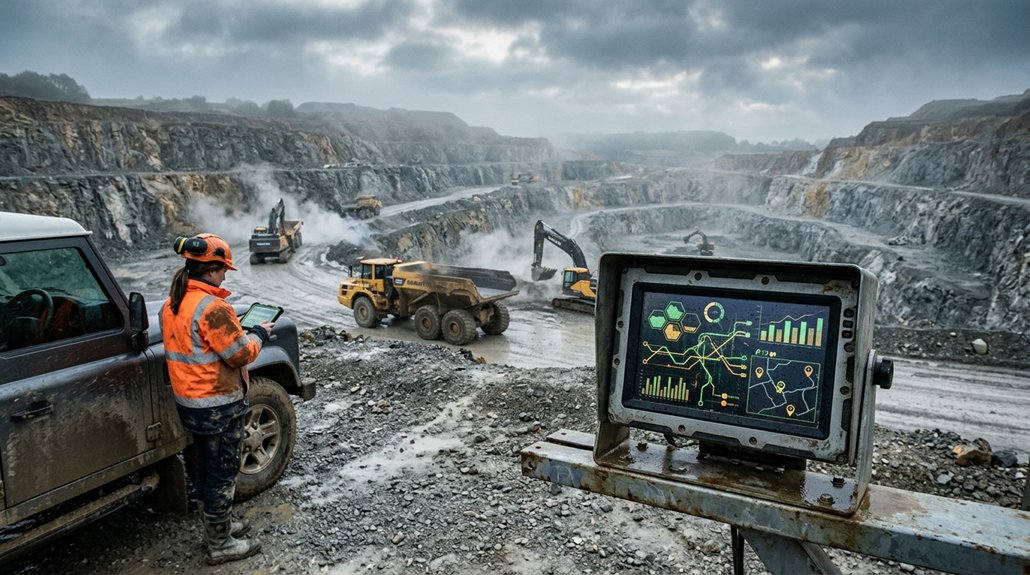
If you manage a UK quarry fleet, remote monitoring and telematics can show you where vehicles are, how they’re being used, and when risks are developing. You can track idle time, fuel consumption, routes, driver behaviour, and machine condition from one system. This helps you reduce emissions, plan maintenance, improve site safety, and support regulatory compliance. However, the greatest gains depend on choosing and applying the right data across your operation.
Key Takeaways
- Monitor machine hours, productive cycles, idle time, routes, and payloads to identify bottlenecks and improve quarry fleet utilisation.
- Use geofences, GPS tracking, and real-time alerts to prevent unauthorised movement, route deviations, speeding, and restricted-zone breaches.
- Reduce fuel consumption and emissions by controlling excessive idling, optimising haul routes, improving traffic flow, and coaching operators.
- Apply predictive maintenance using engine, hydraulic, vibration, temperature, and fuel data to detect faults before costly breakdowns occur.
- Select rugged, secure telematics with open APIs, reliable coverage, user-friendly dashboards, supplier support, and integration with existing systems.
Why Quarry Fleets Need Telematics
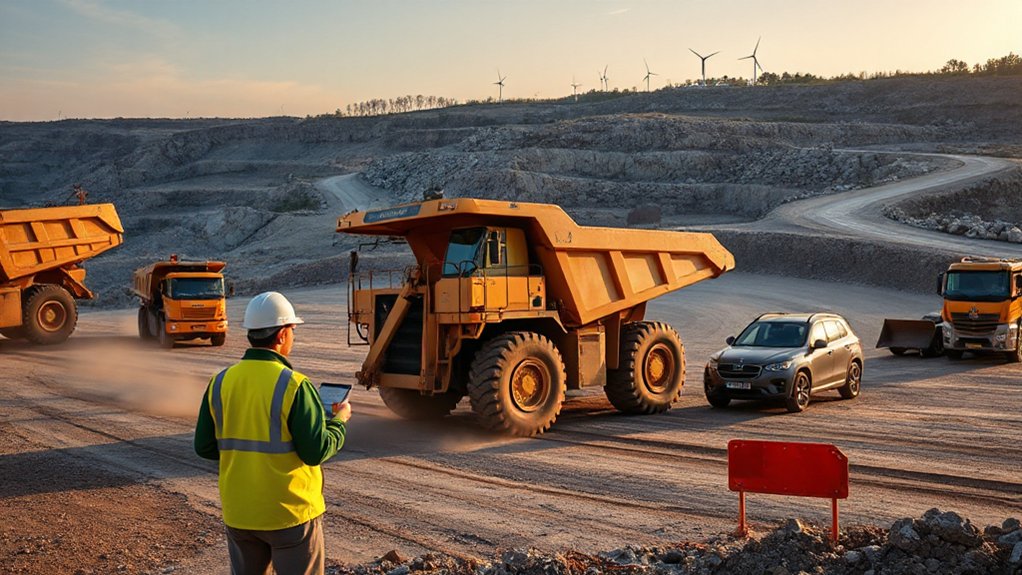
Quarry fleets need telematics because you can’t manage productivity, safety, and operating costs effectively without accurate, real-time data. Telematics connects machines, operators, and site managers through location, condition, and event information, giving you a reliable operational picture.
You can identify unauthorised movement, geofence restricted areas, and receive alerts for harsh impacts, overspeed events, or critical faults. These warnings support faster intervention before a minor issue becomes an injury, breakdown, or environmental incident.
Telematics also creates time-stamped records that help you demonstrate regulatory compliance, investigate incidents, and verify maintenance controls. Choose platforms with role-based access, encryption, secure authentication, and retention policies to protect data security.
Integrate alerts with your site procedures, train operators, and review exceptions regularly, so technology strengthens accountability rather than adding administrative burden.
Measure Fleet Use and Idle Time
Measure actual machine hours, productive cycles, and idle time through telematics rather than relying on operator estimates or shift sheets. You’ll see how long each excavator, dumper, and loading shovel works, waits, travels, or remains inactive.
Use this evidence to establish Operational benchmarks for cycle duration, utilisation, and shift performance across comparable quarry areas. Compare live and historical data to identify bottlenecks, underused assets, and unusual stoppages before they affect production.
Set alerts for extended idling or unexpected movement, then check the cause with supervisors and operators. This approach supports Driver accountability without encouraging rushed work or unsafe shortcuts.
Review dashboards during daily briefings, alongside traffic controls, maintenance status, and fatigue considerations. Keep access permissions controlled, and protect records so managers can investigate incidents accurately and fairly.
Reduce Fuel Use and Emissions
Use telematics to link fuel burn and emissions to machine hours, payloads, routes, idle periods, and operating conditions. Review dashboards weekly to identify excessive idling, unnecessary haul cycles, harsh acceleration, and underloaded journeys.
Set practical targets for litres per tonne and carbon output, then coach operators using clear, evidence-based feedback. Optimise haul roads, loading points, and traffic flows to shorten travel distances and reduce waiting.
Keep tyres correctly inflated, remove excess material, and schedule refuelling to prevent spills and avoid unsafe manual handling. Compare machines against current emission standards when planning renewals, and assess an alternative fuel only after checking compatibility, supply, storage, and fire controls.
Use geofenced idle limits and alerts, but never pressure operators to override warm-up, cooling, visibility, or safe-stop procedures. This approach cuts costs while protecting people, air quality, and compliance.
Prevent Breakdowns With Machine Data
Machine data helps you detect early faults before they cause costly downtime or unsafe operating conditions.
Predictive maintenance alerts identify abnormal temperatures, pressures, and performance trends so you can schedule repairs before failure.
Act on these warnings promptly to protect operators, equipment, and production.
Early Fault Detection
How can you prevent a small equipment issue from becoming an unplanned shutdown? Use remote monitoring to identify abnormal conditions while your quarry machinery is still operating safely.
Sensor integration captures engine temperature, hydraulic pressure, vibration, fuel consumption, and electrical readings. Data analytics then compares live measurements with normal operating ranges, helping you spot gradual changes such as rising temperatures, pressure loss, or unusual vibration.
Check these findings against operator observations and inspection records before authorising further work. Your maintenance team can isolate the affected component, inspect it during a planned access window, and document the evidence.
Always follow manufacturer procedures, lockout/tagout requirements, and site traffic controls. Early fault detection reduces exposure to sudden failures, protects operators from hazardous conditions, and helps you keep production moving without relying solely on manual checks.
Predictive Maintenance Alerts
When sensor trends show a developing fault, predictive maintenance alerts can recommend service before the condition causes a breakdown. Sensor integration combines engine, hydraulic, temperature, vibration, and pressure readings through your telematics platform.
Data analytics then compares live measurements with normal operating patterns, identifying gradual changes that routine inspections might miss.
You’ll receive a prioritised notification explaining the likely issue, affected machine, severity, and recommended action. Schedule planned maintenance during a suitable production window, rather than reacting to an unexpected failure on a haul road or crusher.
Confirm every alert against site conditions and manufacturer guidance; dust, heavy loads, or unusual operating cycles can influence readings. Technicians can inspect safely, isolate equipment, and order parts in advance.
This approach reduces downtime, protects operators from hazardous failures, and helps you extend component life while controlling maintenance costs. Maintain accurate service records to improve future predictions.
Improve Safety Across Vehicles and Plant
Use telematics to monitor driver behaviour, including speeding, harsh braking and unsafe manoeuvres.
Track plant movements in real time to control access, manage routes and reduce collision risks.
Analyse alerts and location data to identify safety risks early and take corrective action.
Monitor Driver Behaviour
Telematics helps you monitor driver behaviour across vehicles and plant by recording speeding, harsh braking, rapid acceleration, cornering, seat-belt use, idling, and unauthorised movement.
You can review each event against site rules, vehicle type, location, weather, and operating conditions, then identify recurring risks before they cause an incident.
Behaviour analysis highlights drivers who may need coaching, while clear dashboards help supervisors prioritise serious patterns rather than isolated errors.
Use the data constructively during Driver training, showing operators when and where unsafe actions occurred and agreeing measurable improvements.
You should set thresholds carefully to avoid misleading alerts, protect personal data, and explain how monitoring supports safety.
Regular reviews can reinforce smooth driving, correct restraint use, lower mechanical stress, and safer working practices across your quarry fleet and plant.
Track Plant Movements
Map vehicle and plant movements in real time to maintain separation, control access, and reduce collision risks across your quarry. GPS telematics shows you where dump trucks, excavators, loaders, and service vehicles operate, helping you enforce one-way routes, exclusion zones, and speed controls.
Set geofences around stockpiles, weighbridges, workshops, and loading areas, then receive alerts when mobile assets enter restricted zones or leave approved routes. Use live location data for Plant scheduling, coordinating equipment changes without sending vehicles into active haul roads or loading points.
Combine machine positions with Material tracking to confirm movements between extraction faces, processing areas, and dispatch bays. Review movement histories to verify route compliance, optimise traffic flow, and support accurate shift handovers.
You’ll improve visibility while keeping vehicle and plant operations coordinated.
Identify Safety Risks
When vehicle and plant data is visible in one system, you can identify safety risks before they lead to incidents. Telematics highlights speeding, harsh braking, unauthorised movements, excessive idling, and repeated operation in restricted zones.
You can compare these events with geofenced haul roads, pedestrian areas, loading points, and site traffic plans to strengthen hazard identification. Live alerts help supervisors intervene immediately, while trend reports reveal recurring behaviours, poorly managed routes, or vehicles requiring maintenance.
Use driver scores and equipment histories to target toolbox talks, refresher training, and engineering controls rather than relying on assumptions. You’ll also detect fatigue indicators, seatbelt violations, and unsafe access patterns earlier.
Combining evidence from vehicles and plant supports accident prevention, improves compliance, and helps you verify that corrective actions reduce risk across quarry operations.
Choose the Right Quarry Telematics System
Choosing the right quarry telematics system starts with matching its capabilities to your site’s operating and safety requirements. Assess whether it tracks vehicle location, speed, engine health, payload, fuel use, and operator behaviour across your fleet.
You’ll need reliable coverage, rugged hardware, and sensors that withstand dust, vibration, moisture, and temperature changes.
Check data integration with your existing fleet-management, maintenance, and site-access platforms. Open APIs can prevent isolated information and support accurate reporting.
Evaluate the user interface, ensuring supervisors can interpret alerts, trends, and machine status without specialist training.
Prioritise configurable geofences, collision warnings, fatigue monitoring, and emergency notifications, while controlling access to sensitive data.
Request a live demonstration and trial the system on representative routes.
Confirm supplier training, UK-based support, cybersecurity controls, software updates, and transparent subscription costs before committing.
Frequently Asked Questions
How Much Does Quarry Telematics Installation and Ongoing Monitoring Typically Cost?
You’ll typically pay £500–£2,000 per vehicle for installation expenses, then £15–£60 monthly for monitoring; your cost estimation should include connectivity, integration, training, maintenance, and safety alerts to protect operators and equipment.
Can Telematics Integrate With Existing Quarry Management and Payroll Software?
Yes—you can integrate telematics with existing quarry management and payroll software through APIs or scheduled exports. You’ll synchronise hours, costs, fleet safety, and driver behavior data, reducing manual entry while strengthening compliance, reporting, and operational control.
What Mobile Network Coverage Is Required for Remote UK Quarry Sites?
You’ll need reliable 4G coverage, with 5G beneficial but not essential. Verify Network reliability and Signal strength across working areas, stockpiles, and haul roads; use external antennas, dual-SIM devices, or satellite backup where coverage fails.
How Long Does Telematics Data Remain Stored and Who Can Access It?
Your data’s digital footprint may linger from days to years, depending on Data retention policies; Access control protocols determine who can view it, while you should restrict permissions, audit access, and confirm deletion schedules contractually.
Are There Legal or GDPR Requirements for Monitoring Quarry Vehicles and Operators?
Yes. You must meet UK health-and-safety, employment, and GDPR obligations. Establish a lawful basis, provide transparent notices, minimise collection, secure records, restrict access, retain data appropriately, and document Legal compliance and data privacy controls.
Conclusion
With remote monitoring and telematics, you’ll turn quarry fleet data into practical action. You can measure utilisation, cut idle time, reduce fuel use, identify maintenance risks, and respond quickly to unsafe behaviour. Geofencing, alerts, and machine diagnostics give you clearer control across vehicles and plant while supporting compliance. Treat your telematics platform as the fleet’s nervous system: it connects every operation, helping you make safer, faster, and more efficient decisions across your UK quarry.