
- Key Takeaways
- What is Sandstone Quarrying?
- The Geology of Sandstone
- Modern Sandstone Quarry Tech
- Environmental Stewardship
- The Human Element
- Sandstone in the Market
- Conclusion
- Frequently Asked Questions
- What is sandstone quarrying?
- How is sandstone formed geologically?
- What modern technologies are used in sandstone quarries?
- What are the main environmental impacts of sandstone quarrying?
- How do quarries practice environmental stewardship?
- What skills do workers in sandstone quarries need?
- How is sandstone used in today’s market?
Key Takeaways
- Sandstone quarrying is a staged, engineering-driven activity that starts with geological site selection and overburden removal and continues through block extraction, on-site processing and transportation. Each stage demands detailed technical planning to manage quality and expenses. Much like quarrying marble, knowledge of the geology of sandstone, such as its depositional environment, mineral composition, porosity and strength, is important in selecting suitable deposits and determining the extraction and processing methods.
- Effective site selection depends on rigorous geological surveys, core analysis, and assessment of layer thickness and continuity, combined with checks on terrain, groundwater, access, and regulatory constraints to ensure long-term viability. Readers planning or evaluating quarries can apply this by creating a structured checklist that covers geological, logistical, and legal factors before committing capital.
- Contemporary quarrying and processing employs dedicated equipment including diamond wire saws, hydraulic splitters, heavy excavators, stone saws and polishers that need to be specified and serviced based on quarry size, block size and desired output rates. With GPS mapping, remote sensing, digital management systems and water recycling, they can deliver improved yield, safety and environmental performance as well as less waste and lower operating costs.
- Environmental stewardship in sandstone quarrying relies on formal impact assessments, erosion and dust control, efficient use of energy and water, and well-designed land reclamation that restores soil, vegetation, and habitats once extraction ends. Operators can strengthen their social license to operate by setting clear sustainability targets, monitoring them continuously, and integrating reclamation planning from the start rather than waiting until closure.
- Human elements continue to be key as experienced quarrymen, machinists, and stonemasons provide security, accuracy, and quality, while community relations foster confidence and backing surrounding quarry operations. Daily safety briefings, mandatory PPE, visible site signage, and communication with neighbours and local groups go a long way in safeguarding individuals, minimizing accidents, and cultivating positive relationships for the future.
- In the marketplace, sandstone vies on quality, consistency, and price against alternatives, with demand fueled by construction, infrastructure, and landscaping projects locally and globally. Producers who uphold trusted quality control offer a varied product mix, anticipate economic and regulatory trends, and invest in sustainability and global partnerships are best equipped to capitalize on new opportunities and mitigate risk.
===
Quarrying sandstone is the process of cutting, breaking, and removing sandstone rock from the earth for use in construction, roads, and landscaping.
Quarrymen employ drills, wire saws, and wedges to cleave blocks from natural beds. Many places establish explicit regulations for dust control, water utilization, and land reclamation.
With an eye toward planning work or studying this field, people monitor stone quality, safety regulations, and long-term site impact, which the following sections describe in more detail.
What is Sandstone Quarrying?
Sandstone quarrying is the commercial extraction of sandstone from natural rock formations and its conversion into blocks, slabs, or aggregate for construction and other uses. It is similar to mining but not the same. Mining often targets ores or fuels hidden deep in the ground, while quarrying removes stone exposed or near the surface for direct use in construction, monuments, paving, and landscaping.
Sandstone has been prized for centuries because it is abundant in the earth’s crust, can be cut into regular shapes, and provides an enormous array of colors and textures. Good quarrying practice is about sound extraction methods, clean cutting, and careful planning so the blocks are consistent, waste is lower, and the site stays stable and safer for workers and surrounding communities.
The industry uses two main extraction methods: surface quarrying, called open-pit quarrying, and underground quarrying where galleries run under the surface. Surface quarries are more typical of sandstone because many formations exist as wide, horizontal layers. Underground methods occur where premium stone lies beneath towns, farmland, or protected areas, or where surface removal would be overly destructive.
In both cases, operators move through a similar chain of stages: site selection, overburden removal, block extraction, on-site processing, and transport to clients or secondary plants. These stages are important as sandstone quarries nourish a long value chain. Big blocks might head over to cutting plants for cladding on office towers. Thicker slabs could become steps, bridge stone or urban paving.
Less valuable stone could be pulverized for road base, concrete aggregate, or fill. Sandstone quarrying does have actual environmental and health costs. Land clearing and soil stripping can devastate vegetation and habitats and leave slopes exposed to erosion which deposits sediment into streams. Drilling, cutting, and hauling dust is associated with respiratory and other health problems, particularly if silica content is elevated and controls are lax.
Waste is another fundamental concern. In most sandstone quarries, 10 to 50 percent of the cut rock makes it to market. The remainder consists of off-cuts, broken blocks, or fine slurry from sawing and polishing. Scientists are now investigating the physical and chemical properties of this waste to find out how it might be reused in bricks, cement, or road construction, for example, rather than sent straight to spoil heaps.
For a student or early-career professional eyeing this industry, the technical aspects of quarrying now sit alongside issues of resource efficiency, regulation, and long-term land use planning.
1. Site Selection
Site selection begins with the geology, not the equipment. Teams examine regional geological maps, satellite images and local outcrops to locate formations in which sandstone beds are thick, laterally continuous and not too badly fractured. When a potential region has been identified, they bore holes and perform core sampling to verify grain size, cement type, porosity, color bands and the condition of weathering.
This is how quarry operators determine whether a deposit will produce the large, stable blocks needed for high-end building stone or just smaller pieces and crushed products. Next access and impact. A deposit can check out perfect on a lab report and bomb in real life if roads are bad, power is distant or local communities say no.
Planners consider distance to markets, truck routes, noise, dust and the visual impact on the landscape. They monitor groundwater levels and flow paths, as penetrating a shallow aquifer can either dewater wells or inundate pits. High-production countries like India, China, Italy, Poland, South Africa, Romania, Hungary and Vietnam typically have layered permitting systems that compel this analysis before any rock is displaced.
For practical planning, engineers build a checklist. It often includes terrain slope and stability, thickness and uniformity of the sandstone layers, depth and type of overburden, groundwater and surface water, buffer distance from homes or farms, protected ecosystems, and current land use. Regulatory needs join the technical data, including zoning, environmental impact assessments, labor rules, and health and safety standards.
When these pieces align, a quarry has a better chance of working for decades instead of a few short years.
2. Overburden Removal
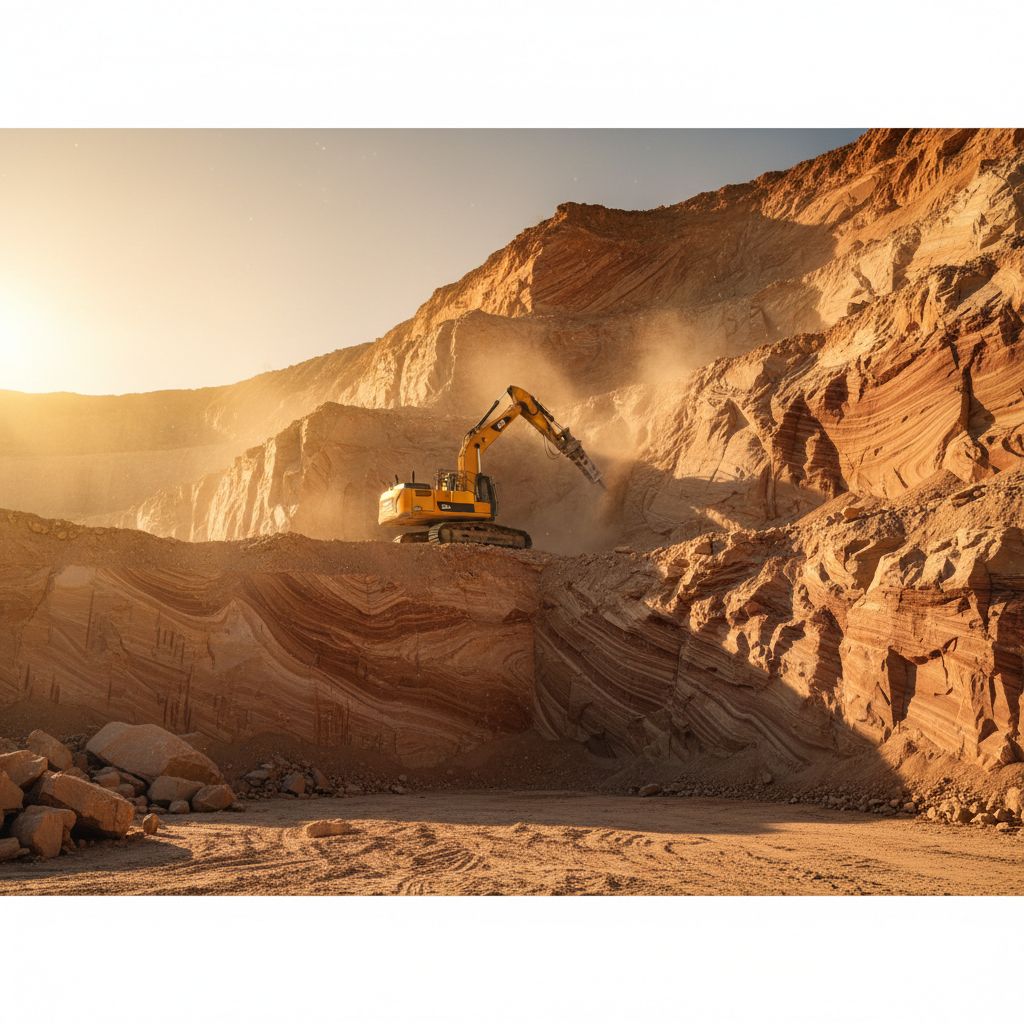
Overburden is everything that lies above the usable sandstone: soil, roots, weathered rock, and loose boulders. In an open-pit quarry, this has to come out of the way before any block extraction can begin, which is why bulldozers, excavators, and occasionally scrapers are the very first machines on location. Crews strip the top layers in controlled lifts rather than in one deep cut, so they can control slopes and maintain working benches wide enough for safe truck and machine maneuvering.
Even this initial phase can influence erosion and water quality for decades. Stripped surfaces are naked and wash away fast in rain or wind. To help control this, quarries may construct drainage ditches, silt fences, small collection ponds or terraced slopes that reduce water speed and capture sediment. Sometimes they seed temporary grass on idle faces.
Best practice records which soil stratum is stored where, so it can be reused for subsequent site rehabilitation. How you handle overburden drives the environmental footprint. If clean and stable, material may be used to construct haul roads, noise berms or future backfill. If it contains clay, organics, or contaminated strata, it might require managed placement and oversight.
When operators treat overburden as a resource instead of pure waste, they often save money and make final rehabilitation more achievable.
3. Block Extraction
Once the sandstone is exposed in benches, block extraction starts. The objective is to segment the rock into rectangular blocks with clean, flat faces and limited internal fracturing by expending the minimum amount of energy and explosives. Typical tools are drilling rigs for boreholes, controlled blasting where permitted, and diamond wire saws that employ a steel cable studded with diamond beads to cut the rock.
In some quarries, particularly those containing softer stone or where vibration limits are low, hydraulic splitters and chain saws are used instead of heavy blasting. How it’s extracted is based on what the market demands and how the rock responds. High-end façade panels require large, perfect blocks. Operators prefer careful drilling and wire sawing, which provides precise cuts and reduced micro-cracking.
For aggregate or lesser-grade products, more aggressive blasting is fair. Quarry depth and bench height influence the technique, as deeper locations encounter greater rock pressure and require more precise control of the way the quarry walls are sliced. Geology still directs every slice. Laborers and engineers chart natural joints, bedding planes, and hairline fractures in the face and floor.
They align cuts with these planes when it helps and avoid them when they would split a block awry. Precision mapping can increase the valuable block output and minimize scrap percentages by a few percent, which is significant in an industry where 50 to 90 percent of quarried stone may become waste or slurry. It reduces the danger of unexpected rock falls.
Safety goes hand in hand with yield. Crews watch wall angles, bench widths, and equipment trails so the quarry remains stable as it deepens. They employ scaling to dislodge loose pieces, secure blast areas from human access, and administer dust and noise protection. Because air filled with fine sandstone dust is dangerous and can potentially cause long-term lung disease, current day operations typically use some combination of wet drilling, dust extraction, and respirators.
4. On-site Processing
Processing on-site transforms the raw blocks into products closer to what builders or designers can use. Large blocks in many quarries are cut down into smaller, standard-sized units with primary saws and then trimmed and shaped with secondary saws, polishers or edge cutters. Some plants add surface finishes such as bush-hammering for slip resistance or flamed for a rough texture, while others do just basic sizing and ship blocks to remote finishing centers.
Sorting is a silent yet significant stage. Employees or automated lines sort pieces by size range, color tone, vein pattern and visible imperfections. Consistent, neat blocks can go to cladding, while variegated or a little bit imperfect stone becomes paving, kerbs or walling. Off-size and chipped pieces often flow to crushing units to become aggregate or sand.
This sorting aids in aligning supply with varying price points and applications across markets. Milling kicks up dust and vibrations, and both impact health. To minimize dust, plants might use water sprays on saw blades, closed-loop water systems where sediment tanks settle out the fine particles and local exhaust ventilation.
Slurry from wet cutting, a mixture of stone dust and water, must be managed responsibly so it doesn’t block drains or seep into surrounding land and streams. Since chronic inhalation of stone dust connects to respiratory disease, proper ventilation and protective masks are non-negotiable.
Storage requires consideration. Cut or semi-finished sandstone is typically piled on flat, drained pads, often with wooden bats in between layers so surfaces don’t chip. Because operators keep track of batches, they can deliver matching colors and textures to the same project over time, which counts for visible facades in public buildings.
5. Transportation
Once dressed or sized, sandstone travels from quarry to users. Large blocks, slabs, or crushed stone are loaded onto trucks and, in some areas, rail wagons by cranes, forklifts, or front-end loaders. They are stacked such that the weight is distributed over the axles and the contact points do not fracture the stone. Slabs often journey in metal A-frames with straps and wooden bracing to separate them.
What’s the impact and cost of route planning? Shorter hauls on appropriate roads reduce fuel consumption, noise, and emissions. For high traffic or housing density, operators might schedule heavy
The Geology of Sandstone
Sandstone is a sedimentary rock consisting of consolidated sand grains, predominantly quartz and feldspar, accompanied by trace quantities of various minerals and rock fragments. For quarrying, this geology matters because grain size, cement type and layer structure all govern how the rock fractures, how durable it is and what it’s actually useful for.
Formation
Sandstone begins life as loose sand deposited in rivers, on beaches, shallow seas, or deserts. As happens over ages, more sediment deposits atop, the old layers become buried, and the sand grains compact under pressure. Most sandstones were once miles beneath what is now the surface, then subsequently re-exposed by uplift and denudation, leaving cliffs, mesas, and other beautiful quarry targets.
Silica, calcite, or clay minerals cement the grains together. Silica cement generally produces hard, durable sandstone that is effective as structural blocks. Calcite-cemented layers can be simpler to cut but might weather quicker in acidic rain. Clay-rich cement can produce weaker, softer beds that may not be ideal for high-load applications.
River channel sandstones are often medium to coarse grained, with cross-bedding and variable layer thickness. They are good for blocks if well cemented. Beach and near-shore sandstones have more uniform grain size and better sorting. They are often ideal for consistent cladding and flagstones. Desert dune sandstones are very well sorted and fine to medium grained. They can split into sheets that are 25 to 75 millimeters (about 1 to 3 inches) thick. Deep marine sandstones are mixed with mud or silt, which results in more variable quality and makes it harder to standardize for building stone.
Older, deeper-buried sandstone is stronger and more compact, with tighter pores and higher density, often 2,080 to 2,640 kg/m³ or roughly 130 to 165 lb/ft³. Burial can discolor through iron oxidation or reduction, so age and depth impact both strength and appearance.
Composition
Building sandstones are typically quartz-rich, with feldspar and lithic fragments (pieces of ancient rock) as significant additions. Quartz-rich varieties tend to be more weather resistant and retain sharp edges, whereas feldspar-rich units can degrade more quickly at the surface.
Mineral mix drives color and texture: iron oxides give reds and browns. Reduced iron or organic matter can bring grays or greens. Volcanic rock fragments may add dark specks or streaks. These characteristics assist in correlating rock to apparent applications such as facing or flagstone.
Before selecting a use, the matrix (fine grains between sand particles) and cement type should be verified in thin section or with simple lab tests. Dense, silica‑cemented sandstone may be appropriate for heavy paving blocks or steps. Slightly more porous, lighter beds are excellent as cladding where weight is a concern. Patio and walkway flagstones typically originate from naturally bedded sandstone that splits easily along flat bedding planes.
Impurities like clay lenses, mica, or soluble salts will weaken stone, increase water absorption, or stain. Catching these soon prevents issues such as surface spalling or salt efflorescence on walls.
Quality
Good sandstone for quarrying tends to have reasonably uniform grain size, low to moderate porosity and good resistance to weathering. Bed-splitting layers are particularly sought after, as these can be cut into flagstones or thin slabs with minimal waste.
Lab tests provide factual information. Compressive strength tests determine if a stone is suitable for load-bearing members and water absorption tested with ASTM procedures indicates the amount of open pore space. Sandstone has more pore space than most igneous or metamorphic rocks, so keeping absorption low is key for freeze-thaw durability and lower maintenance.
Even with visual grading, it still counts. Uniform color, distinct grain, and few natural cracks or joints provide reliable strength and clean looks throughout a project. Logging these characteristics at the quarry simplifies it for architects and engineers to order the appropriate piece for cladding, paving, or interior work.
Sandstone properties range significantly from formation to formation. Sourcing from quarries with a known history of stable geology and conscientious mining provides more consistent blocks and slabs for enduring building.
Modern Sandstone Quarry Tech
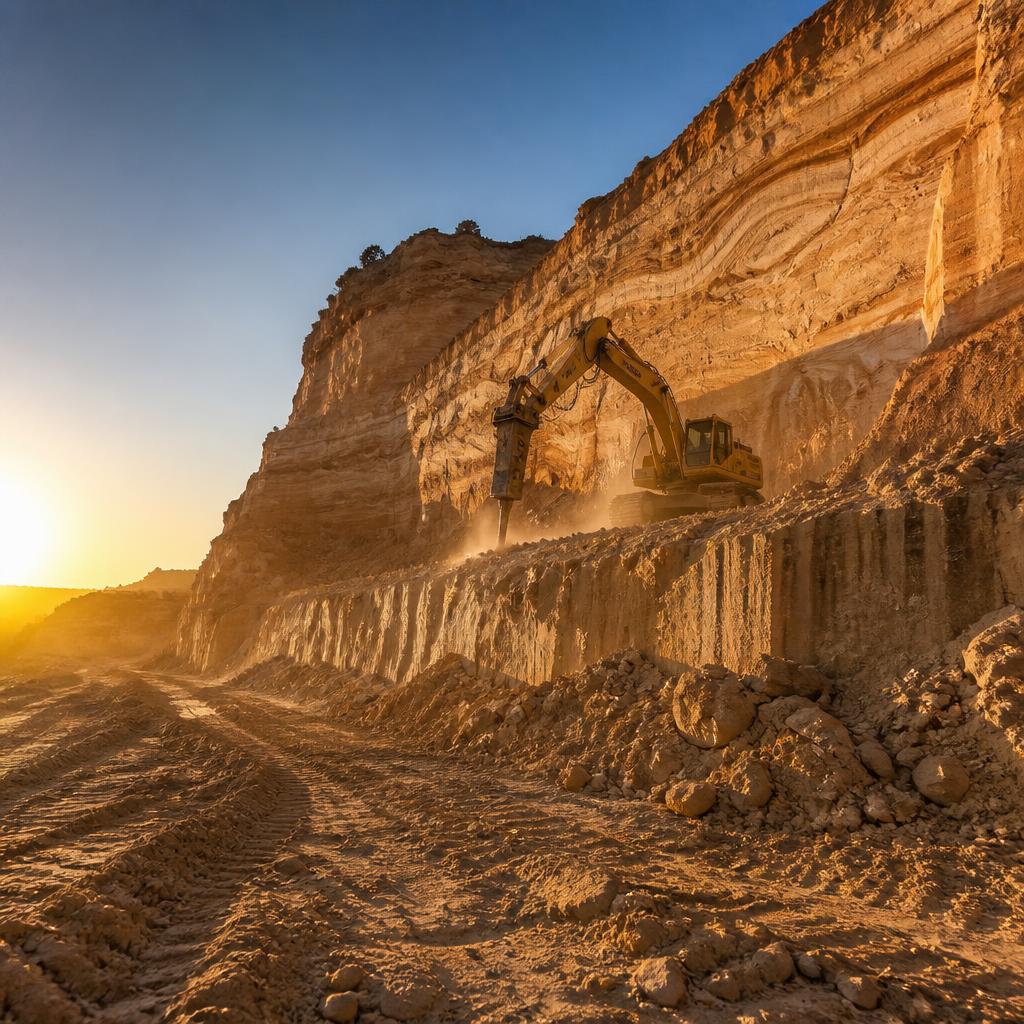
Modern sandstone quarry tech The goal is simple: pull out more usable stone with less risk, less waste, and lower impact on the land.
Prospecting Tools
- Handheld GPS units and GNSS receivers
- Geological hammers and sample bags
- Portable spectrometers and moisture meters
- Drone platforms with high‑resolution cameras
- Satellite imagery and remote sensing datasets
- Ground‑penetrating radar (GPR) where budgets allow
- GIS software for mapping layers, faults, and access roads
Remote sensing and aerial imagery now handle much of the initial prospecting. Teams pore over satellite scenes and drone orthophotos to identify bedding planes, joint patterns and weathered zones. They also determine whether trucks and cranes can access the site without major earthworks.
Engineers then aggregate information from field sampling, lab tests, vintage mining reports, and digital terrain modeling. This assists in predicting deposit size, depth, and quality prior to anyone purchasing machinery or filing permits. This is a crucial step when you’re weighing surface quarrying against more expensive underground mining, for example.
Prospecting tools require frequent adjustments and elementary maintenance. Updating drone firmware, checking GPR antennas, and verifying GPS accuracy keeps the models honest. This reduces the chance of misinterpreting the stone mass.
Extraction Equipment
Contemporary mining combines drilling, precise explosions, and machine cutting. Heavy-duty excavators open benches. Hydraulic splitters follow natural joints to free blocks without over-breaking. Diamond wire saws and fixed blade saws then cut clean faces so blocks fit the intended sizes and maintain their organic form.
Quarry teams select equipment according to the dimensions of the pit, the size of the blocks desired and the daily production. A tiny decorative-stone site might get by with a compact wire saw and one excavator. A large operation feeding crushed sandstone aggregate for roads and rail beds may add multiple drill rigs and high-capacity loaders.
Periodic inspection is a must. Monitoring wire tension, hydraulic lines, and drilling rigs every shift not only keeps people safe and machines humming. It also expedites quality control, as worn tools cause fracturing and waste.
Automation now drives drill patterns, wire velocity and even haul routes. This lowers labour cost per cubic meter and delivers consistent, accurate cuts that minimize waste. It enables sustainable extraction and subsequent site rehabilitation.
Processing Machinery
Processing plants convert these rough blocks into cladding panels, paving, and split-face units. Large stone saws, fixed blade and diamond wire, make primary cuts. Then, cutting tables size smaller pieces for tiles or masonry. Polishing machines and surface finishers add final textures, from smooth honed slabs to flame-textured non-slip steps.
Plants that include water recycling systems close the loop on slurry and rinse water. Simple settling tanks or sophisticated filter presses clean water so it can cycle back to saws and polishers. This lowers total water use and discharge to the environment.
A nice flow chart assists here. It ought to cover every stage from raw block receipt, inspection and trimming, through first-stage and second-stage sawing, surface finishing, quality control, packing, and inventory logging in a digital system.
Experienced operators tie it all together. They tune feed rates, check for hidden fractures, separate waste and decide when off cuts turn into crushed sandstone for aggregate. All of this is done to improve yield, meet construction demand and support today’s waste reduction goals.
Environmental Stewardship
Environmental stewardship in sandstone quarrying is the careful management of land, water and ecosystems so that the stone can be extracted with minimal long-term damage. It approaches the quarry as one element of a broader landscape in which the air we breathe, jobs in the community, and community health are all connected.
Uncontrolled quarrying can destroy soil, contaminate streams, and displace farmland, pushing people off their land and severing livelihoods. Good operators design for impacts, controls and final land use from the beginning, not as an afterthought.
Impact Assessment
Impact assessment starts with baseline studies before any overburden is removed. Teams map habitats, survey plants and animals, and record groundwater levels, surface water flow, and quality. They check current air quality, so later dust and diesel emissions from sandstone extraction can be measured against a known starting point.
This early work helps pick access roads, stockpile areas, and crusher locations that reduce harm to streams, wetlands, and nearby homes. Robust evaluations incorporate individuals who reside and operate in the vicinity of the location. Quarry planners ask local residents, farmers, and community groups to tell them how they use the land and the water, what noise levels already feel like, and which views matter to them.
This input frequently uncovers small springs, grazing trails, or cultural sites that maps overlook, and it can direct haul routes or working hours that minimize conflict. All probable effects must be summarized in a plain, technical statement. These cover air emissions, dust and particulates, noise from drills and crushers, ground vibration from blasting, traffic and visual landscape change.
The report should outline waste streams such as overburden, low-grade stone and wastewater with a plan for safe handling and reuse where possible because stewardship requires responsible waste management. Prior to work beginning, the operator must secure permits from environmental agencies and adhere to regulatory limits on emissions, groundwater drawdown, and blasting.
Regulators typically impose monitoring responsibilities, like periodic dust and noise inspections, and can demand reporting when output ramps up or new benches are launched.
Sustainable Practices
Sustainable sandstone quarrying emphasizes efficient extraction that reduces waste and conserves energy. With careful bench design, precise drilling, and controlled blasting, they reduce the proportion of fractured, unusable stone. This reduces the amount of waste rock that needs to be stockpiled or hauled and minimizes the footprint and fuel consumption of trucks and loaders.
Closed-loop water systems help limit pressure on local rivers and aquifers. A number of quarries capture runoff and process water in settling ponds, then pump the clarified water back for saw cooling and dust suppression. Fines from these ponds can be dewatered and reused in backfilling or sold as construction material.
Stone offcuts and broken blocks may be crushed for aggregates, road bases, or landscaping products instead of waste tips. Being sustainable means actively protecting and rebuilding habitats. Operators can maintain buffer zones of native vegetation, avoid critical breeding seasons for wildlife when planning blasting, and immediately restore native plants on unused slopes and berms once stable.
Reclaimed areas can, over time, become wildlife corridors that connect the patches of natural areas left around the quarry. Since it varies, your activities must be routinely audited against established sustainability targets. Dust, noise, water per tonne of stone, and fuel are monitored and compared to targets.
If numbers drift upward, managers tweak work practices, service equipment, or install controls such as enhanced dust suppression systems or superior haul road surfacing.
Land Reclamation
Land reclamation starts on the drawing board, not at closure. Environmental Stewardship Engineers design final slopes, benches, and drainage, then plan grading to smooth steep faces where safe, spread topsoil or suitable growth media, and establish native grasses, shrubs, and trees.
In worked-out pits, if long-term water balance and safety are carefully modeled, stable lake basins can be formed. A robust reclamation plan connects the end landform to practical future land uses. Old sandstone quarries become parks where old haul roads are now walking trails, water bodies for managed recreation, or where soil is deep and good enough for fields and orchards.
In urban or peri-urban locations, a few sites are reconfigured for light industry or solar farms, which provide opportunities for local economies to thrive once extraction ceases. Reclaimed land requires follow-up. Our teams keep an eye on our slopes for erosion, inspect drains and ditches after heavy rain, and monitor plant survival and species balance over the years.
If bare patches, invasive species, or unstable gullies show up, they tweak seeding, supplement with erosion blankets, or reinforce channels. This long perspective focuses on recovery for ecosystems rather than green cover that fails after a few seasons.
There are numerous examples of quarries transformed into landscapes of utility for both nature and local populations. Disused sandstone pits have been landscaped as nature reserves where wetlands nurture bird and amphibian life or as public parks with safeguarded play areas and newly created walking trails.
These are examples of how careful planning, consistent monitoring, and collaboration between the companies, communities, and agencies can transform a former industrial site into a shared resource.
The Human Element
Sandstone quarrying still operates on human know-how, intuition, and experience, even when the quarry is staffed by equipment and sensors.
Community
Quarries exist within living communities, rather than in some abstract notion of “resource zones.” This means transparent, consistent communication with neighbors is not a goodwill gesture; it’s fundamental risk management. They want to know when the blasting will occur, how dust is managed, why the slopes look so… and what happens to the land after extraction is finished.
Weekly meetings, a clear point of contact for complaints, and open public access to monitoring data minimize rumor and foster trust. Sandstone is a local employer and a supply chain hub as well. In others, such as certain areas of India that currently account for over 27% of the sandstone output worldwide and over 11% of the stone exports, quarrying defines entire local economies.
Jobs in cutting, transport, repair, and small workshops disseminate income into local towns. The enormous increase in quarrying areas since the 1990s has been linked to increasing health issues, so profits should be paired with actual investment in healthcare and safe workplaces.
Community engagement is most effective when residents are able to see and feel what the quarry is doing. Site tours, safe viewing platforms, dust control, noise limits, and land restoration information sessions help people bridge the abstraction of “the quarry” with concrete protections.
They may highlight research into stone waste reuse, now an international arena, transforming what once was dumped fines into tiles, aggregates, or engineered stone. Partnerships with schools, local environmental groups and cultural bodies add yet another dimension.
Joint tree planting on restored benches, shared monitoring of streams or student projects on the geology of the site move the quarry from being simply a risk to a shared project that still has to be watched and questioned.
Safety
Work in a sandstone quarry subjects people to rock falls, silica dust, noise, and heavy equipment. Baseline protection needs to be non-negotiable: hard hats, eye and hearing protection, high-visibility clothing, and respiratory gear matched to measured dust levels, all in line with OSHA-style rules and equivalent standards elsewhere.
Fit testing respirators, making sure gloves match tasks, and monitoring actual use on the floor matter more than a policy paper. Training must be continuous, not just a one-and-done lecture. Brief toolbox meetings on slope hazards, traffic patterns, or safe blasting distances, as well as full emergency drills that include local fire and medical teams, keep everyone prepared for actual events.
In a number of places, quarry workers themselves have registered intimate data on how benches collapse, how equipment reacts on wet ramps and how powder drifts with the wind. This local knowledge is as valuable as any third-party audit.
A straightforward checklist system helps transform safety from fuzzy good intentions into concrete daily behavior. Items might include: visual checks of haul trucks and braking systems, verification of guardrails and berm heights, inspection of bench angles and signs of cracking, review of blasting exclusion distances, and confirmation that first-aid gear and communication tools work.
Because quarrying may strip topsoil, annihilate vegetation, and modify soil chemistry, environmental inspections can be folded into the same routine so safety and ecology are addressed in tandem rather than in silos. There’s less risk for visitors and nearby residents with clear site maps, color-coded signage, and fenced restricted zones.
Trespass to pit floors, highwalls, or explosive stores remains a frequent contributor to fatal or disabling injuries. It sounds trivial, but these commonsense cues—ground markings, locked gates, multilingual signs—frequently make the difference between a safe tour and an accident of fatal consequence.
Legacy
Our human history with quarries goes back a long, long way, and sandstone is the common thread. Monumental works often depended on forced labor. Thousands of enslaved people and other workers quarried, hauled, and set stone for temples, palaces, and civic buildings.
On Easter Island, new evidence indicates that nearly the entire society contributed at various phases in quarrying, carving, and transporting the statues. This transformed extraction into a communal endeavor instead of a specialized trade. Transportation was ingenious and manpower-intensive.
At Stonehenge, workers dragged, carried, and floated on rafts down rivers bluestones from far-off quarries — a reminder of how risky and coordinated early quarrying was even in the absence of engine noise. Modern sandstone sites still employ teams that blend geologic reading of the rock with machine skills.
Now, it’s drills, saws, and loaders instead of levers and sledges. Due to this extended arc, ancient quarries and implements are worth more than nostalgia. Committed quarry faces, plotted chisel squares, and heritage cranes or wagons could become open-air museums or guided walks.
Displays that demonstrate the transition from hand wedges to wire saws to diamond-tipped cutters impart to visitors a tangible impression of how things evolved and create opportunities to discuss how older miners lived, what health maladies they encountered, and how today’s dust controls and medical screenings attempt to prevent such harm from being repeated.
Oral histories from quarrymen, stonemasons and local families help fill in holes in the written record. Some communities have taken these stories to create mini exhibits in town halls or schools, connect them with contemporary research on recycling stone waste, and ask whose labor is seen in the buildings we pass by daily.
Sandstone in the Market
Sandstone travels a rather defined path in the market, sculpted by construction cycles, local geology and the ability of quarries to reliably deliver process-ready stone at scale.
Economic Drivers
It’s a demand story that follows construction booms, transport corridors, and city upgrades. Residential work is especially important. Housing is expected to take about 46.0% of sandstone use in 2026 as cladding, paving, and garden features need repeat orders for matching colors and textures.
Mass transit and public-space projects contribute bulk, as long stretches of paving, retaining walls, or noise barriers frequently require a single quarry source to maintain the visual tone consistent across years of phased work.
For anyone in or near the sector, it helps to watch three signals: real estate starts (new homes and mixed-use blocks), public works pipelines (roads, transit, utilities), and commercial landscaping plans. Repair cycles count. In the UK, sandstone demand is poised to grow at around 4.5% compound annual growth rate to 2036 on the back of façade repair, church and civic-building restoration, and hard-landscape replacement in older towns.
It’s price pressure from other stone and from concrete. Meanwhile, the true margin frequently resides in logistics, workforce, and regulatory overhead more than the actual quarry face.
|
Material |
Typical unit cost (EUR/m², processed) |
Durability in exterior use |
Visual customization |
Notes |
|---|---|---|---|---|
|
Sandstone |
Medium |
High (if dense, low porosity) |
High (color, finish, format) |
Good balance of cost and design flexibility |
|
Granite |
High |
Very high |
Medium |
Harder to cut, higher tooling and freight costs |
|
Limestone |
Medium |
Medium |
Medium–High |
Can weather faster in frost or acid rain |
|
Concrete |
Low |
Medium–High |
Medium |
Cheap, but less natural variation and repair can show |
Transport usually determines whether a quarry is profitable. Moving heavy blocks 300 to 400 kilometers by road can wipe out most margin, so having access to rail or port connections gives an obvious advantage.
Labor access, safety regulations, and quarrying taxes alter the cost foundation. Tighter regulations can increase short-term prices but unlock lucrative markets that need checked, compliant production.
Global Demand
Sandstone has a broad footprint. Asia Pacific generated about USD 243.7 million in 2025, roughly 57.00% of global sandstone revenue, and is expected to reach around USD 255 million in 2026. Countries such as India and China drive much of this, with forecast growth at around 6.8% and 6.1% compound annual growth rate, propelled by high-rise housing, transport links and massive campus-style developments that utilize sandstone for plazas, stairs and landscape walls.
Europe maintained a robust presence as well with approximately USD 101.3 million in 2025, representing 24.00% of the global market and anticipated close to USD 105.1 million in 2026. In many European cities, sandstone is part of the historic fabric so planners frequently request sympathetic stone in restoration or infill work.
On the supply side, sandstone represented roughly 17% of domestic dimension-stone tonnage in 2025, so producers can subdivide an entire host of gradations and colors for various export niches. Trade flows rely increasingly on standards and paperwork.
Buyers in higher-end markets will want test data for compressive strength, water absorption, slip resistance, and frost resistance, in addition to certificates on quarry management and labor practices. Meeting these standards can unlock entry to multi-year framework agreements with builders, municipal agencies, and international retailers.
One way to mitigate risk is to sell more than one type of product from the same quarry. Blocks can become slabs and tiles. Offcuts can be turned into setts, curbs, or small-format pavers. Lower-grade stone can be crushed into aggregates, bedding layers, or cladding backfill.
Producers that invest in surface finishes—flamed, brushed, sandblasted—tend to touch both budget projects and higher-margin architectural work. To get to far away markets, middlemen count. Relations with international distributors, stone yards, and design studios frequently begin at fairs and local stone shows, where architects and purchasers can check sandstone against granite, limestone, and engineered stone in one location.
Future Trends
Growth above 6.8% CAGR is associated with construction growth and particularly with the sandstone-processing capacity of areas such as Rajasthan, catering to both domestic and export markets. Meanwhile, numerous clients are now verifying how quarries manage water consumption, waste rock and energy, driving suppliers toward optimized saws, closed-loop water systems and scheduled site rehabilitation that can be demonstrated in tender submissions.
Tech continues to transform the space. On the extraction side, it’s heading toward more optimized drilling patterns and wire-saw control to maximize yield per block. Automated polishing and CNC profiling standardize quality and reduce lead times on custom pieces such as steps, coping, or carved façade elements.
On the sales side, digital catalogs, texture libraries, and augmented-reality tools allow architects to try out sandstone colors and joint patterns on 3D-model surfaces before they submit a spec. Consumer taste is changing as well.
We’re seeing more demand for warm, tactile surfaces, honed or lightly brushed finishes and color blends that resonate with local geology instead of industrially consistent, factory-like stone. Quarries that log their beds, map color runs and can keep accurate records of every lot can supply repeat orders years later. This is a key requirement for repairs in large housing estates or campus projects.
Regulation will likely tighten on dust, noise, transport emissions and land restoration. Some governments are already combining this with big infrastructure plans that depend on natural stone’s durability. Following new regulations and fiscal incentives, as well as tracking markets, particularly in rapidly developing cities throughout Asia and some areas of Africa, helps suppliers and distributors determine where to invest in equipment upgrades, where to maintain inventory, and which product lines to expand first.
Conclusion
Sandstone quarry work binds rock, tools, people, and markets into a single tight circle. Each incision on the rock face connects back to deep time to earth and genuine craft on location. Modern drills, saws, and wire rigs drive production, and crews still scan every block with eye and ear. Well-designed projects minimize dust, noise, and waste. Intelligent recirculation of water and spoil makes sites cleaner and safer for nearby towns.
Whether it’s for a design job, a build, or a study plan, sandstone provides transparent information, durable longevity, and a tremendous variety of style. To dig a little deeper, consult a local quarry visit guide, a stone trade association, or a local stonemason who actually does real work.
Frequently Asked Questions
What is sandstone quarrying?
Quarrying sandstone operators extract overburden, excavate the stone from the rock face, and process it into slabs or blocks for construction, paving, cladding, and landscaping.
How is sandstone formed geologically?
Sandstone is formed from sand grains compressed over millions of years. Over time, layers of sand are buried, compressed, and cemented by minerals such as silica or calcium carbonate. This process produces a hard rock with exposed grains and bedding layers.
What modern technologies are used in sandstone quarries?
Today’s sandstone quarries utilize diamond wire saws, chain saws, drills, and even computer-controlled cutting machines. These tools are more precise, less wasteful, and safer for workers than traditional blasting methods.
What are the main environmental impacts of sandstone quarrying?
Significant effects are landscape changes, dust, noise, and potential effects on local water and habitats. Accountable quarries deal with waste, dust and noise control, site restoration, and comply with rigorous environmental permits and regulations.
How do quarries practice environmental stewardship?
A lot of quarries employ water recycling, dust suppression, and smart planning of extraction zones. They rehabilitate mined-out areas with earth, vegetation, and occasionally ponds. Environmental monitoring and compliance audits aid in ensuring long-term sustainability.
What skills do workers in sandstone quarries need?
Laborers require an understanding of geology, stone characteristics, and quarry equipment. Safety training is vital. Several positions involve expertise in cutting, lifting, quality assurance, and occasionally digital equipment such as 3D scanning and CAD planning.
How is sandstone used in today’s market?
We quarry sandstone for building facades, interior walls, floors, paving, landscaping, and monuments. Its inherent texture, color variations, and durability make it a favorite of architects and outdoor designers in residential, commercial, and even public projects.