
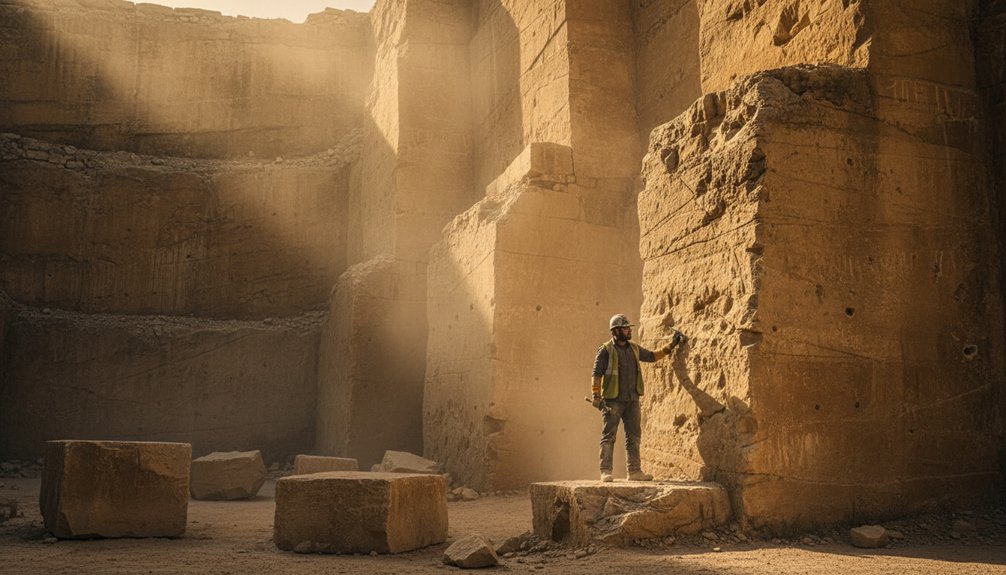
When you walk past St Paul’s Cathedral, you’re seeing a geological supply chain preserved in stone: Portland quarries helped shape London’s identity, while Clipsham, Tisbury, Aberdeen, and Welsh slate supplied façades, bridges, monuments, and roofs across the capital. You’ll find that quarry selection depended on compressive strength, weather resistance, workable bedding planes, and transport access—not appearance alone. The engineering decisions behind these materials reveal why London’s landmarks still endure, and where their hidden stone origins remain.
Key Takeaways
- Portland Stone Quarries supplied the limestone used in St Paul’s Cathedral, the Palace of Westminster, and other iconic London landmarks.
- Clipsham Quarries provided fine-grained, durable limestone for government buildings and institutions requiring precise architectural detailing.
- Aberdeen’s Rubislaw and Kemnay quarries supplied strong, weather-resistant granite for bridges, monuments, embankments, and civic structures.
- Welsh slate quarries in Gwynedd produced durable roofing slate that protects London’s historic buildings from rain and frost.
- Britain’s stone network also included Bath stone, Yorkstone, and Welsh rubble, transported by canals, railways, rivers, and coastal ships.
Portland Quarries Behind St Paul’s and Westminster
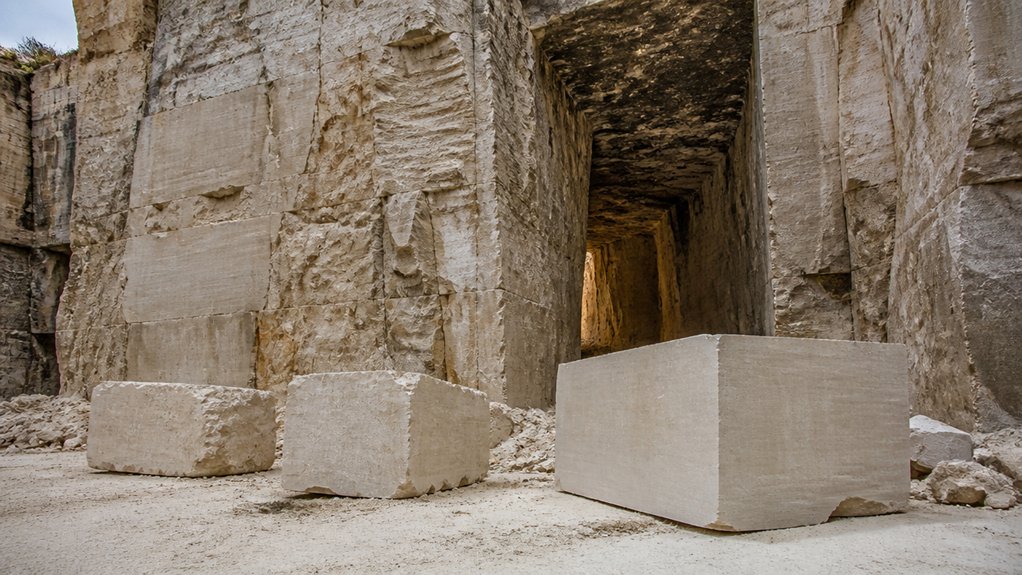
Portland stone, quarried on the Isle of Portland in Dorset, supplied the durable limestone used in major London landmarks including St Paul’s Cathedral and the Palace of Westminster. When you examine these quarries, you’ll find carefully sequenced extraction from horizontal beds, where workers separated sound blocks along natural joints.
Modern quarrying techniques use diamond wire saws, channel-cutting equipment, and controlled splitting to limit waste and preserve consistent dimensions. Historically, masons selected stone at the face, then squared and dressed it before shipment.
Stone transportation relied on coastal vessels carrying heavy blocks from Portland Harbour to London, followed by river and road distribution to building sites. You can still recognise Portland stone by its pale colour, oolitic texture, and weathering performance, which supported demanding architectural and structural applications across the capital.
Clipsham Stone for London’s Government Buildings
While Portland stone shaped many of London’s most recognisable monuments, Clipsham stone supplied a distinct, fine-grained limestone for government architecture.
When you examine façades, cornices, and carved details on civic buildings, you’ll notice Clipsham’s consistent colour, tight grain, and strong weathering performance.
Quarried in Rutland, this oolitic limestone allowed masons to achieve crisp mouldings and precise ashlar courses without sacrificing structural durability.
Modern quarrying techniques use diamond wire sawing and controlled splitting to separate sound blocks along natural bedding planes.
These stone extraction methods reduce waste, protect block integrity, and support accurate dimensional production.
You’ll also find that Clipsham’s relatively uniform texture simplifies grading, cutting, and hand-finishing.
Its technical reliability made it a practical specification for institutional projects requiring permanence, refined detailing, and disciplined masonry construction.
Tisbury Stone and the Palace of Westminster
You’ll find Tisbury Stone’s heritage in its historic use as a durable, fine-grained limestone for Westminster’s fabric.
As you assess Westminster’s limestone restoration, you’ll see conservation teams match replacement blocks for petrology, colour, porosity, and weathering performance.
This approach preserves the Palace’s architectural character while meeting rigorous masonry-conservation standards.
Tisbury Stone’s Heritage
Tisbury Stone helped define the Palace of Westminster’s architectural character, supplying durable limestone for selected interior and restoration work alongside the building’s principal Caen and Anston stones. As you examine this material, you’ll see how its close-grained texture, workable bedding planes, and restrained colour supported Gothic detailing without competing with the principal masonry palette.
The stone’s value extends beyond individual applications: it represents Tisbury heritage, linking Wiltshire’s quarrying tradition with one of Britain’s most significant civic complexes. You can also recognise Tisbury craftsmanship in the accurate selection, dressing, and finishing of blocks for architectural integration.
Quarrymen and masons assessed geological consistency before extraction, helping guarantee reliable dimensions and predictable tooling. That disciplined approach established Tisbury Stone as a credible architectural material and strengthened its place within Britain’s enduring building-stone heritage.
Westminster’s Limestone Restoration
At the Palace of Westminster, Tisbury Stone supports restoration work where replacement masonry must match historic fabric in colour, grain, porosity, and tooling response. When you specify it, you’re not simply selecting a visually similar limestone; you’re controlling petrographic compatibility, moisture movement, and weathering performance.
Tisbury Stone’s consistent bedding characteristics help masons produce accurately gauged blocks, ashlar, tracery components, and carved details. Before installation, you’ll assess the existing stone through visual inspection, microscopy, and testing for absorption, density, and salt susceptibility.
These measures inform responsible Restoration techniques, including indent repairs, dutchman inserts, lime-mortar repointing, and selective replacement rather than wholesale renewal. Limestone durability depends on sound detailing, breathable joints, and effective rainwater shedding.
Aberdeen Granite in London Bridges and Monuments
You’ll trace Aberdeen Granite from Scotland’s quarries, where its dense, weather-resistant mineral structure supports demanding civil works.
You’ll see how engineers specified it for bridges built to last under heavy traffic, hydraulic exposure, and freeze-thaw cycles.
You’ll also identify its role in London’s monumental landmarks, where structural performance meets architectural permanence.
Aberdeen Granite’s Origins
Before Aberdeen granite appeared in London’s bridges and monuments, it was quarried from the hard, coarse-grained rocks surrounding Aberdeen in northeast Scotland. As you trace its origins, you’ll find a crystalline igneous stone formed deep underground and exposed through geological uplift and erosion.
Mineralogists value its interlocking quartz, feldspar, and mica structure, which gives the material exceptional granite durability and a distinctive silver-grey appearance. Nineteenth-century quarrymen extracted blocks from extensive workings at Rubislaw, Kemnay, and other nearby sites.
Their quarrying techniques combined drilling, plug-and-feather splitting, wedges, and controlled blasting to separate sound stone along natural joints. Teams then squared, dressed, and graded each block for transport.
Aberdeen’s quarries supplied consistent dimension stone, while local finishing expertise prepared it for demanding architectural specifications and London’s monumental construction requirements.
Bridges Built To Last
When London expanded its bridges and civic monuments, Aberdeen granite provided the compressive strength, abrasion resistance, and weathering performance required for permanent public works. You can see its engineering value in bridge piers, abutments, kerbs, and facing blocks exposed to traffic vibration, freeze-thaw cycles, saturation, and de-icing salts.
Quarry operators selected sound, fine-grained material, then controlled extraction and dressing to produce accurate beds, tight joints, and dependable load transfer. Granite’s low porosity limited water ingress, while its mineral hardness resisted polishing, rutting, and impact at heavily used approaches.
For you, that performance illustrates architectural durability as an outcome of material specification, workmanship, and maintenance planning. Modern sustainable quarrying strengthens this legacy through staged extraction, waste reduction, water management, and responsible restoration, supporting infrastructure that serves generations safely.
Monumental London Landmarks
Across London’s monumental bridges and civic landmarks, Aberdeen granite serves as both structural fabric and architectural statement. When you examine granite facings, piers, steps, and memorial plinths, you’ll see why specifiers valued its compressive strength, low porosity, and resistance to freeze-thaw deterioration.
Quarrying techniques produced accurately dimensioned blocks, while controlled splitting preserved the stone’s crystalline texture and consistent colour. Stone transportation then moved heavy units from northeast Scotland through coastal shipping and river wharves, before horse-drawn haulage and rail distribution carried them to construction sites.
London’s engineers used the material where durability and visual authority mattered: bridge abutments, civic elevations, embankments, and commemorative monuments. You can still read the granite’s performance in crisp arrises, stable joints, and weather-resistant surfaces, even after generations of urban exposure and pollution.
Welsh Slate Quarries Behind Historic London Roofs
Welsh slate quarries supplied the dense, durable roofing material that protected historic London buildings from persistent rain and frost. When you examine older roofs, you’ll often find precisely graded Welsh slate, split along natural cleavage planes and trimmed into uniform sizes.
Historical quarrying in Gwynedd and nearby districts developed sophisticated extraction methods, allowing workers to separate thin, strong slabs from deep underground beds. Producers then sorted the slate by thickness, colour, and durability before transporting it by canal, rail, and coastal shipping.
Its low water absorption and high flexural strength suited steep roof pitches, where overlapping courses shed rainfall efficiently. You’ll also notice slate’s consistent performance under freeze-thaw cycling, reducing delamination and maintenance demands.
Skilled roofers fixed each piece with copper or galvanized nails, preserving watertight detailing across generations.
Why London Was Built With British Stone
Welsh slate formed only one part of a broader British stone supply network that shaped London’s streets, churches, civic buildings, and private houses. When you examine the city’s fabric, you’ll find Bath stone, Portland stone, Yorkstone, granite, and Welsh rubble selected for performance as much as appearance.
Historical quarrying supplied materials near navigable rivers, canals, and coastal routes, reducing haulage costs and securing consistent masonry for rapid urban expansion. Each stone offered specific technical advantages: Portland stone resisted weathering, Bath stone carved cleanly, and Yorkstone tolerated heavy paving loads.
Local extraction also supported standardized coursing, ashlar work, kerbs, steps, and monumental carving. That material diversity gives London its architectural significance. You can still read geology in façades, showing how British quarries governed durability, detailing, logistics, and national architectural identity.
Frequently Asked Questions
How Were Quarry Stones Transported to London Before Modern Railways?
You’d move quarry stone by horse-drawn wagons to navigable rivers, then load barges for London. Ancient transportation relied on waterways; the quarry workforce managed extraction, dressing, haulage, transshipment, and delivery before railways transformed logistics.
Are These Historic Quarries Still Operating Today?
Some historic quarries still operate, but you’ll find many closed or repurposed. Historic preservation guides selective extraction, while quarry restoration rehabilitates exhausted faces; production now depends on reserves, planning consent, environmental controls, and market demand.
What Tools and Techniques Were Used to Cut the Building Stones?
You’ll find stone carving relied on wedges, hammers, chisels, and pitching tools; later, pneumatic equipment and diamond saws improved cutting techniques, while skilled masons used bedding planes, templates, and abrasive finishing to achieve precise architectural dimensions.
How Has Quarrying Affected the Surrounding Landscapes and Local Communities?
Quarrying reshapes landscapes like a geological scar: you’ll see habitat loss, altered drainage, dust, and noise. Yet you also inherit community heritage, employment, infrastructure, and restoration obligations that mitigate environmental impact through phased rehabilitation planning.
Can Visitors Tour the Quarries That Supplied London’s Landmarks?
You can tour some quarries through scheduled heritage visits, though access varies by operator, safety controls, and conservation status. Guides explain extraction methods, underground tunnels, and quarrying myths; don’t enter abandoned workings independently, regardless of apparent stability.
Conclusion
When you walk through London, you’re seeing a national geology lesson carved into public memory. Portland stone gives St Paul’s its enduring clarity; Aberdeen granite strengthens bridges and commemorative works; Welsh slate still protects historic roofs. These quarries weren’t merely suppliers—they were engineered sources selected for durability, workability, and transport efficiency. Imagine restoring a weathered Westminster façade: matching its original stone preserves both structural performance and the story embedded in every block for future generations.