
- Key Takeaways
- 1. Bulldozers: Clearing the Ground for Success
- 2. Graders: Creating Smooth and Safe Haul Roads
- 3. Drilling Machines: The Precision Tools for Breaking Rock
- 4. Wire Saws: Slicing Through Stone with Accuracy
- 5. Excavators: The Heavy Lifters of the Quarry
- 6. Crushers: Turning Big Rocks into Usable Materials
- 7. Screening Equipment: Sorting Materials for Quality Control
- 8. Loaders: The Key to Efficient Material Handling
- 9. Haul Trucks: Transporting Materials Out of the Quarry
- 10. Water Pumps: The Unsung Heroes of Dust and Water Management
- Conclusion
- Frequently Asked Questions
- What are the main types of quarrying machines used in a modern quarry?
- How do drilling machines and wire saws work together in quarrying?
- Why are crushers and screening equipment important in a quarry?
- What is the role of bulldozers, graders, and excavators in a quarry?
- How do loaders and haul trucks improve quarry efficiency?
- Why are water pumps important for dust and water management in quarries?
- What safety factors should be considered when using quarrying machines?
Key Takeaways
- Bulldozers and graders provide the backbone of safe, efficient quarrying by establishing stable working areas and well-built haul roads, so make the investment in properly sized machines and rigorous maintenance routines to safeguard both equipment and staff. Checking blades, tracks and road conditions on a regular basis helps lower fuel consumption, tire wear and unexpected downtime throughout the site.
- Drilling machines and wire saws decide the cost and quality of rock fragmentation and cutting, so optimizing drill power source and bit type to geology is as crucial as selecting diamond wire for hard stones like granite and marble. Introducing state-of-the-art drillers and cutters, backed by training for operators, increases efficiency and accuracy, decreases waste, and reduces lifetime operating costs.
- Excavators, loaders and haul trucks are the heart of material movement within the quarry, so their bucket sizes, payload capacities, and cycle times need to be in tune with production goals and material properties. Planning loading points, travel routes and scheduling to coordinate these machines can increase throughput and reduce idle time and fuel use.
- Crushers and screening equipment control final product size and quality, so proper crusher selection and screen configuration is critical to meeting customer and regulatory specifications. Round-the-clock observation of crusher settings, screen performance and product granulometry allows operators to rapidly fine tune processes and maintain steady output.
- Water pumps and dust control systems quietly protect health, visibility, and equipment by managing groundwater, runoff, and airborne particles, particularly in proximity to drilling, crushing, and hauling operations. Managing water through efficient dewatering, dust control, and environmental stewardship is key for sustainable and safe quarrying operations.
- A quarry hums best when all the machines work together as a system, not as individual islands, so managers must bring equipment selection, operator training, preventive maintenance, and safety under one operations umbrella. Periodical performance checks against metrics such as fuel per tonne, downtime hours, and product recovery allow you to improve and quarry more sustainably over time.
===
Quarrying machines are hard-hitting equipment and machinery utilized to slice, bore, pulverize and transport rock and minerals in open-pit and surface mining operations.
Wire saws cut pristine blocks and hydraulic breakers shatter hard granite for highways.
In huge quarries, loaders, conveyors and crushers flow together in one tight feed to increase production and reduce idle time.
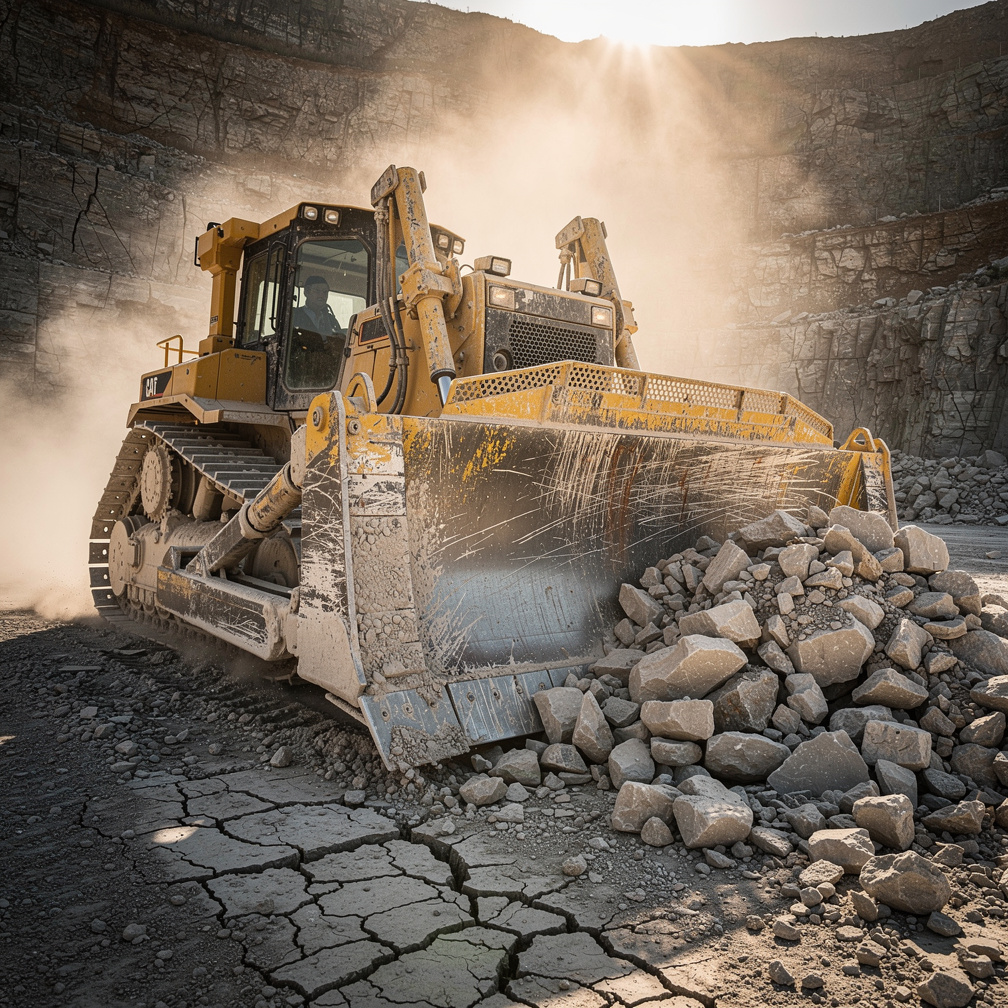
1. Bulldozers: Clearing the Ground for Success
Bulldozers provide quarries a neat, solid beginning by quickly stripping and forming the earth. In virtually all quarry configurations, dozers operate first in line. Their front blade slices and shoves topsoil, demolition debris and overburden from the ore rock that contains the true treasure. In a hard rock quarry, a dozer could peel off the top 0.5 to 2.0 meters of loose soil and plants, push it to stockpiles, and open a clear bench line for drill rigs.
That initial sweep increases safety levels since loose roots, shrubs and soft pockets no longer lurk beneath truck tracks or drill holes. It’s not just about graphene now. The same kind of work showed up at the new international airport in Beijing, where bulldozer fleets dealt with mass land clearing and grading before any high‑precision work moved in.
Tracks and blades collaborate to contour the quarry floor and ramps into safe work areas. A wide track frame distributes the machine weight, allowing it to travel on soft or disrupted terrain without sinking. That sure comes in handy on overburden dumps or clay benches. Its blade then cuts high spots and fills low spots to construct flat pads for crushers, conveyors, and drilling platforms.
In a limestone pit, a crawler dozer can grade a 50-meter-long loading pad with a gentle 1 to 2 percent slope, so water drains away and haul trucks don’t battle ruts every shift. Crawler bulldozers are best suited for uneven ground, steep faces, and loose rock. This is why they’re often found in quarries, unlike wheel dozers.
Choosing the right bulldozer for quarry duty involves considering more than mere size. Engine torque and horsepower determine how much compacted clay or shattered rock the machine can shove in a single pass. A dozer in the 150 to 250 hp range often fits small to mid-size quarries, while very large pits may run 300 or more hp machines for heavy ripping and bulk push.
Blade type and size play a big role. A straight blade provides control for finish grading, while a semi-U blade carries more when pushing piles of blasted rock. Undercarriage condition is another big wildcard since tracks and rollers bear a significant portion of the wear on jagged rock. Fuel efficiency and modern tech complete the package.
Newer bulldozers offer GPS grade control, advanced hydraulics, and eco-friendly engines, which reduce fuel consumption and increase accuracy. In certain locations, GPS assistance allows drivers to maintain a tight grade tolerance, so subsequent devices invest less time reprocessing the same dirt.
Quarry work punishes machines, so maintenance planning is as important as machine selection. Hydraulics operate under full load, cutting edges wear down on abrasive rock, and undercarriage components scour through mud and rock each shift. With a proper service plan, a bulldozer can run 10,000 to more than 20,000 operational hours, often lasting well beyond a decade in many quarries.
That schedule typically includes routine track tension inspections, blade cutting edge rotations, oil and filter replacements, and monitoring cooling systems closely in dusty areas. Some of the newer units support telematics, so the crew can monitor fuel consumption, idle time, and fault codes, and then schedule maintenance before a minor problem halts production.
In everyday quarry work, dozers push, grade, and clear land, and that mix proves why they continue to be one of the most versatile implements on site.
2. Graders: Creating Smooth and Safe Haul Roads
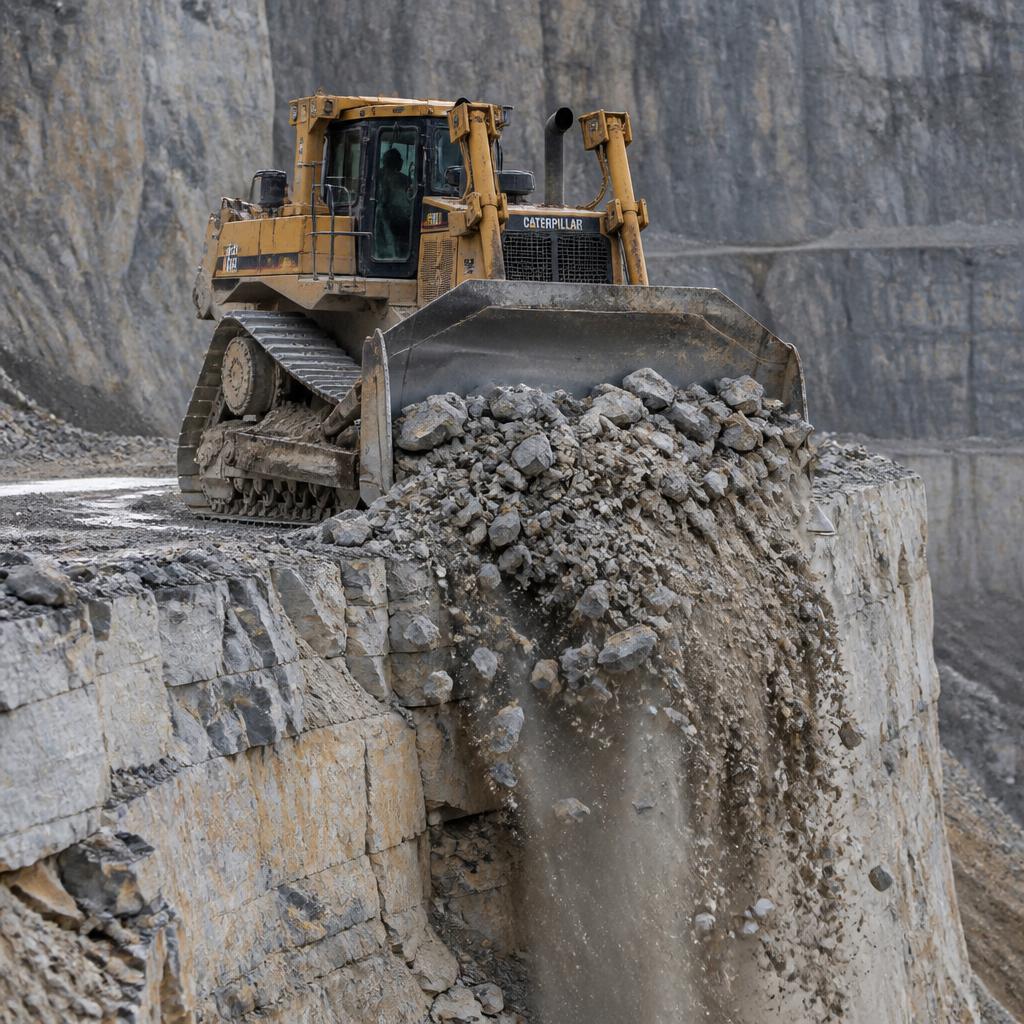
At most sites, they’re working almost non-stop because every loaded truck and every ton of material depends on road quality. On our busy quarry, roads transport hundreds of thousands of tons per day, so the surface degrades quickly. A grader cuts high spots, fills low spots and maintains a consistent running surface so quarry trucks, wheel loaders and water trucks don’t rattle themselves to pieces from incessant shock and vibration.
Less bouncing on ruts and potholes translates to lower tyre wear, fewer suspension failures and better fuel use. A 90-ton rigid dump truck can maintain its rated speed on a well-graded road without hard braking or sudden steering corrections, reducing operator fatigue and ‘near miss’ occurrences.
Blade control is where grader work gets more technical. Operators trim the road crown and crossfall to establish a firm slope, typically in a narrow range, so water runs off rather than pools. Over long uphill or downhill stretches, the perfect overall road grade will hover somewhere around 8 to 10 percent, balancing truck traction, braking distance, and engine load.
In European quarries, two-way traffic is common, so graders must form wide cross-sections. Straight sections typically adhere to the three or more truck widths rule and corners and curves rise to four or more. That additional width allows room for big trucks to pass one another without gouging the inside edge and tearing up the shoulder, something that regularly occurs on meandering bends with bad grading.
To work graders into the quarry workflow, planners typically schedule passes during haul traffic lulls or immediately after blasting and muck pile cleanup. One easy example is a loop where trucks haul from the pit to the crusher all day. A grader might tackle the uphill haul road in the morning to cut ruts from spinning wheels, then switch to the downhill braking zone in the afternoon to clear corrugation and potholes.
In Central and Northern Europe, transforming rain or snow, the grader breaks slush, restores drainage ditches, and reshapes crowns so meltwater exits the running surface quickly. In the Mediterranean, the issue frequently reverses. With limited water and a powerful sun drying the surface, graders operate with the least water possible to prevent dust while still maintaining a compactable layer.
It’s this continuous monitoring that keeps grader work in line with production goals. Supervisors monitor truck cycle times, spot speeds, and incident reports and connect those statistics to road segments. If loaded trucks can’t maintain their rated speed at full payload under wet or night conditions, that section of road requires additional grader time or a different profile.
Operators observe fuel consumption and tire damage by segment. A surge in cuts or blowouts at a single curve can indicate bad crossfall or a broken shoulder. On night shifts, graders help support safe work by maintaining access into loading and dumping areas smooth and by operating with appropriate light plans because good light around shovels and crushers prevents hits, slips, and roll events.
3. Drilling Machines: The Precision Tools for Breaking Rock
Next are drilling machines, which are precise and consistent in the output of breaking rock. To break the rock, drills provide clean, consistent blast holes that influence the entire quarrying process, from rock fragmentation to the crushed stone that exits the site. Rock drills and complete drilling rigs come together to create blast patterns guiding controlled rock fragmentation.
On your average bench, a rig drills a matrix of straight, evenly spaced holes with consistent depth, so the blast tosses rock predictably as opposed to in chunks. That control is important when the ultimate products are consistent gravel, sand, or base layers for roads and buildings. More than a few quarries notice improved gradation and reduced oversize boulders after they crimp drilling tolerances on depth and straightness.
What type of drill power source and system you choose depends a lot on rock type and quarry layout. Pneumatic drills suit light, portable work or small benches, while hydraulic rigs provide greater energy transfer and swifter penetration rates in large, hard rock quarries. Electric rigs — hybrid or battery units — emit no exhaust and can lower energy costs where power is steady on-site.
Tool selection has to fit the rock. Hard, abrasive granite or basalt requires heavy-duty button bits with premium carbide inserts, along with robust extension rods and shank adapters. Softer limestone can employ less aggressive bits to save dollars without impacting production. Many operators benchmark penetration rate, bit life, and fuel use among their rigs and observe cost savings as much as approximately 25 percent when the drill type and tooling align with the geology.
Diamond drills, while more costly initially, provide tight deviation control and extended tool life in very hard formations. Precision top hammer rigs provide concentrated energy at the bit to drill swiftly through medium to hard rock, whereas down-the-hole (DTH) systems operate straighter holes in deeper benches or extremely hard terrain.
All have trade-offs in speed, hole quality and air or energy demand, so the best fit depends on bench height, hole diameter and blast design. By observing penetration rate, torque, feed force and air or water flushing flow, the crew can adjust parameters on the fly, save tools and maintain vibration at a low, steady rate. Fatigue-resistant tools and lower rig vibration increase operator comfort and safety by reducing the chances of abrupt failures.
To keep that performance dependable, routine maintenance of drilling equipment is a staple, not an afterthought. They clean flushing holes for dust removal, check button wear so bits get swapped out before cracks, and grease threads on rods and shanks to prevent seizure and thread galling.
By implementing rigorous daily and weekly inspection routines, some sites experience tool life gains of 20 to 30 percent, as well as fewer pattern stops. That sort of discipline promotes consistent penetration, straighter holes, and consistent burden and spacing, all of which contribute to improved blast control and higher quality crushed stone.
4. Wire Saws: Slicing Through Stone with Accuracy
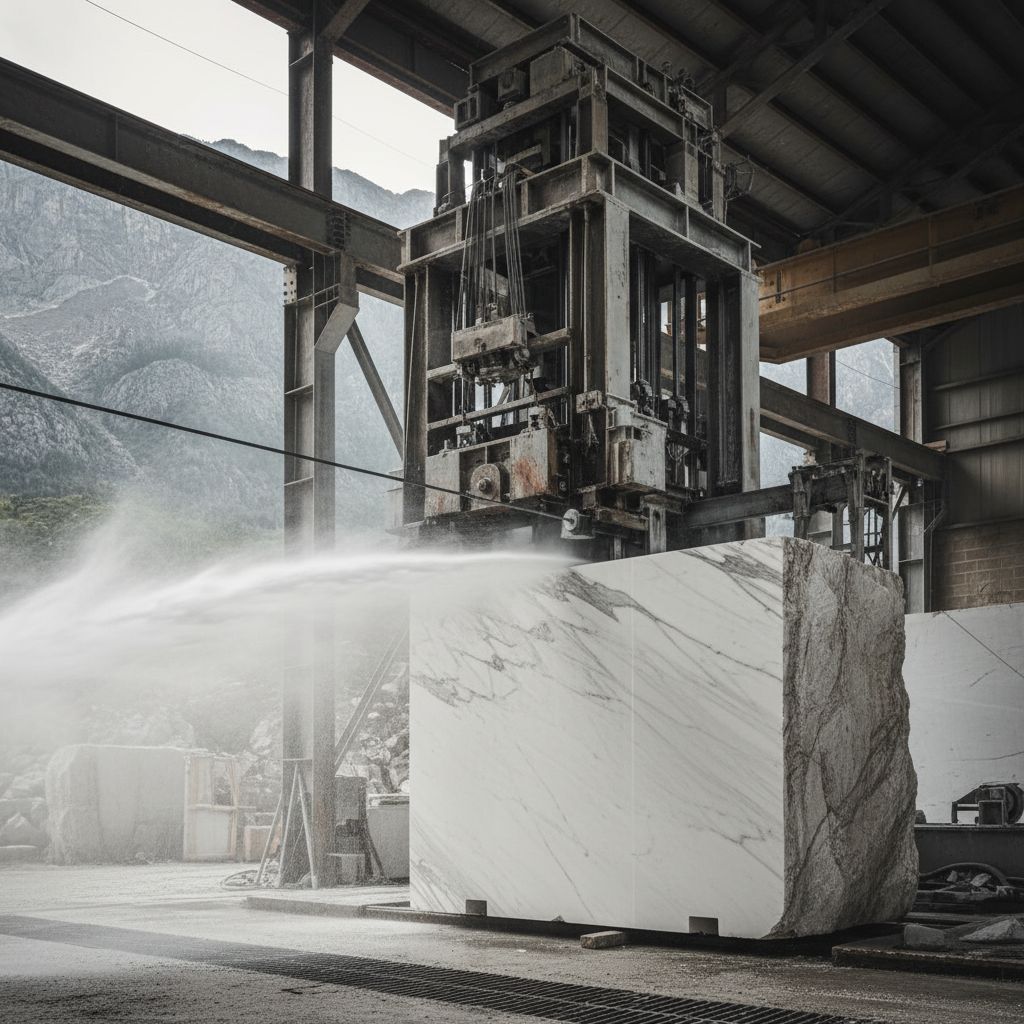
Wire saws are noted for clean cuts, high yield, and very steady accuracy. A properly rigged wire saw slices through giant stone blocks, slabs, and even carved monuments with very little waste. In fact, many quarry operations see up to 30% more recoverable material than with traditional drilling and splitting techniques, due to the rock face kerf remaining narrow and the cut line adhering to the intended path.
A standard quarry wire saw might saw through marble or granite blocks up to approximately 6 cubic meters, with a kerf in the 5 to 8 millimeter range, meaning more stone remains in the product instead of becoming dust and chips. On finishing lines, certain machines get down to plus or minus 0.5 millimeters, which suits export-grade slabs and tight tolerance façade panels.
For hard stone such as granite or engineered quartz, diamond wire saws provide the optimal balance between speed and longevity. The core is a steel cable with beads strung along it. Those beads can be electroplated or sintered. Electroplated beads cut quickly at first, but the diamond surface is thin.
Sintered beads embed diamond throughout a thicker matrix, so new grit continues to emerge as the outer layer wears. In several trials, sintered beads outlast electroplated by around two times on hard stone, reducing changeover and idle time. Operators monitor the cutting rate, and after speed decreases by approximately 15%, they schedule a bead or wire replacement to maintain both quality and throughput rather than waiting for a complete failure in the middle of a cut.
Well positioned wire saws within the quarry have a genuine impact on cost per cubic metre. Fixed or rail-mounted machines follow the main faces, which results in blocks leaving the wall essentially close to final size. This saves unnecessary breaking, hauling and re-sawing.
For instance, one cut might liberate the back of a bench with a vertical wire and undercut it with a horizontal one, so loaders shift only finished blocks. There are no more oversized heaps that require heavy trimming. Shorter lift distances and fewer re-handles reduce the chances of cracks and chips before the block even arrives at the processing plant.
To maintain consistent outcomes, operators require comprehensive training on tension, feed rate, cooling water, and alignment. Tiny adjustments in these environments affect cut quality and wire life. Excessive force flexes the wire, causing wavy cuts.
Too little pressure slows production. A well-trained crew learns to read sound, vibration, and amperage on the main motor, then tunes parameters to hold a stable cutting speed, often close to 1.5 square meters per hour on automated machines. They are taught safe threading, start and stop routines, and logging bead wear and breakage.
That discipline results in longer wire life, safer work, and more consistent spec-meeting slabs on the first pass.
5. Excavators: The Heavy Lifters of the Quarry
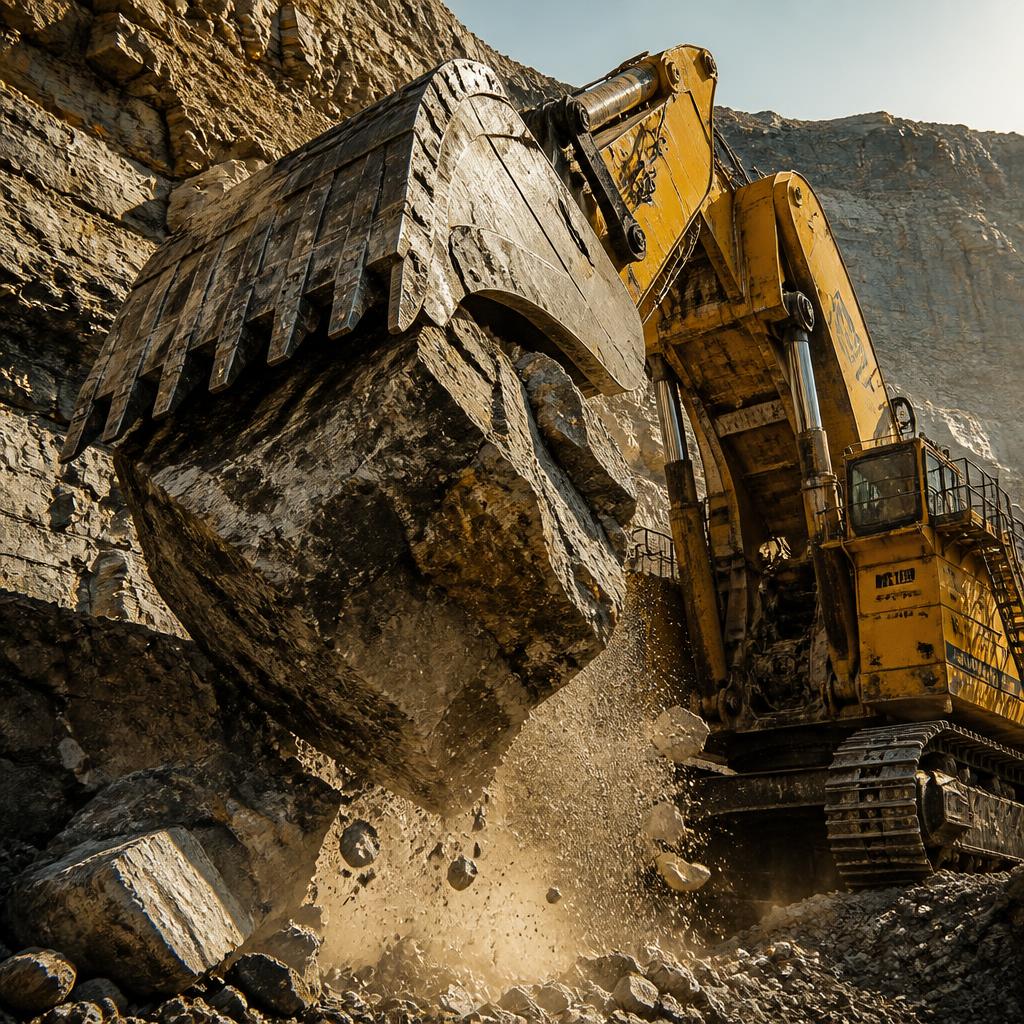
Excavators are the workhorses that shuffle massive quantities of rock at a consistent tempo. In a traditional open pit quarry that extracts rock, sand, or gravel from the surface, excavators dig, lift, and load practically around the clock. A big machine with nearly 500 hp, excavators can dig down roughly 7 to 8 meters and clear hard overburden to keep haul trucks and conveyors humming.
One operator can sit in the cab and cycle through dig, swing, and dump in seconds, pulling out broken rock and loading a 40-ton truck in just a few passes. To fit the machine to the job, size and bucket capacity must correspond with both the quarry scale and material type. A big granite quarry that blasts rock blocks overhead often runs heavy excavators with wide, rock-duty buckets that hold several cubic meters.
Those buckets use heavy-duty teeth and wear plates so they can pry and scoop dense rock without rapid wear. A smaller sand and gravel pit may have a 70 to 120 HP excavator with a lighter bucket that digs 5 to 6 meters deep. That configuration is still digging 5 to 6 meters deep, only shifting softer material with less consumption and cheaper hauling.
To do more than dig, many crews add job-specific attachments to their excavators. Hydraulic hammers shatter oversize boulders that cannot go in the crusher. Shears slice scrap steel from structures or equipment buried near the face. Rippers scarify hard ground prior to the primary digging pass.
Quick couplers let the operator swap out a hammer for a bucket in minutes, so one base machine can support multiple activities in the same shift. For instance, the operator could start with a hammer to trim a highwall, then switch back to a rock bucket to shovel the broken material onto a conveyor.
To keep all of that power safe and steady, regular inspections and maintenance count. Operators and techs do daily walk-arounds to catch oil leaks, loose track pads, or cracked bucket teeth before they become downtime. Planned work on hydraulic filters, engine oil, and cooling systems keeps those 500 horsepower engines running under high load in dusty air.
Some sites even log hours and sensor data to schedule component rebuilds ahead of time. Add to that, secure effort in a quarry demands expert operators who understand machine restrictions, the soil conditions, and the movement of vehicles around the crusher and truck.
6. Crushers: Turning Big Rocks into Usable Materials
Crushers transform giant rock blocks into clean, usable aggregate that meets actual construction requirements. In a quarry or recycling plant, raw feed could come in as boulders well over 500 mm across. Crushers grind that down to standard sizes for concrete, asphalt, base layers or railway ballast. The material goes through one or more stages of crushing so the output meets a desired gradation, such as 0 to 32 mm road base or 10 to 20 mm coarse aggregate. That difference, from random rock sizes to tight, repeatable ranges, is what makes the material useful and easy to sell.
To deploy crushers well, it pays to think in terms of the four fundamental crushing actions. Impact, attrition, shear, and compression all appear in actual machines, sometimes in combination. A jaw crusher depends on compression as a moving jaw plate compresses rock against a fixed one. An impact crusher hurls rocks at high speed against breaker plates, adding strong impact and some attrition as well.
Shear and attrition become more important when shaping softer stone or recycled material, where the aim is to scrub off the feeble bits and polish the surface. In reality, the grind often runs in phases. Primary, secondary, and tertiary crushing each step down the size and tighten the gradation curve.
For primary work, jaw crushers remain popular because they reliably process hard, abrasive rock such as granite, basalt, or hard limestone. A jaw might be used, for example, on a typical setup to reduce 700 mm feed to 150 to 200 mm. Following these, cone crushers typically take over as secondary or even tertiary units. Cones excel when a plant requires smaller, finer products, like 5 to 10 mm aggregate for premium concrete.
Impact crushers – HSI and VSI – then address scenarios where shape is of great importance. An HSI in secondary service can pulverize medium-hard rock and concrete debris. A VSI in the last stage can produce more cubical grains that work well in asphalt mixes. The real selection depends on feed size and hardness, desired final product size and shape, reduction ratio, and which stage of the line you’re on.
To provide consistent output, crushers occupy central positions in a larger aggregate system. Feed hoppers, vibrating feeders, scalping screens, and conveyors all meter rock in and carry product out in a steady flow. A three-stage line might run a jaw, then a cone, then a VSI, each associated with screens that feed oversize back to the appropriate crusher.
That loop keeps product within spec while slicing waste. Auto-controlled plants can monitor load, power draw, and belt scales in real time, then adjust chutes or feeder speeds to keep the entire chain in balance.
To maintain quality, operators monitor crusher output and adjust settings frequently. Depending on the type of crusher, key levers include closed side setting, rotor speed for impact units, and chamber selection on cones. Small moves in those numbers can alter both capacity and product profile.
For instance, closing the gap on a cone typically increases fines content and increases the reduction ratio, but it also increases wear and energy draw. Just as crucial is preventive maintenance. Putting new mantles, liners, toggle plates, and other wear parts on a set schedule prevents surprise downtime and sagging performance.
A plant that monitors wear, replacement schedules, and output statistics can detect trends, reduce unscheduled downtime, and maintain tons per hour close to the design level.
7. Screening Equipment: Sorting Materials for Quality Control
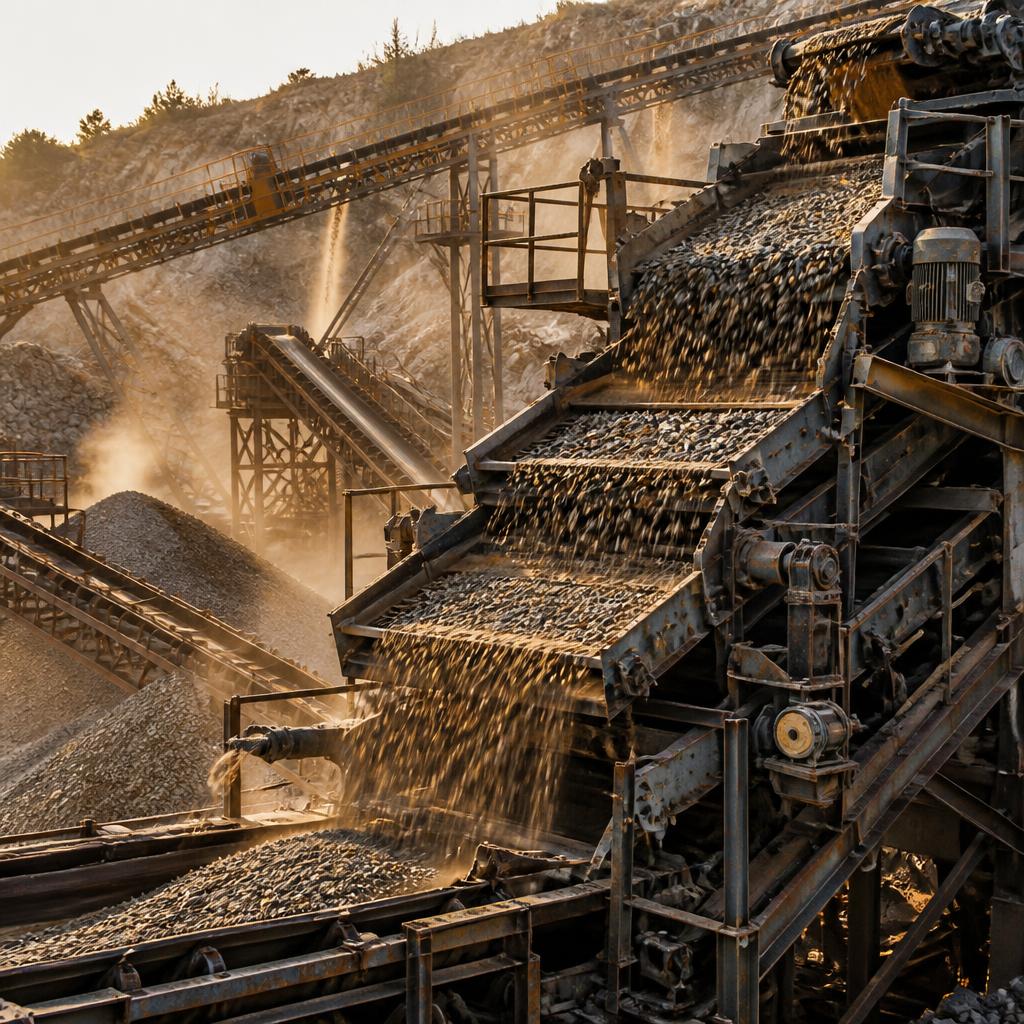
Screening gear keeps material size in check so only in-spec stone advances. Screening equipment separates mixed piles into distinct size categories, which is a fundamental step for quality control in quarry work and many other industries. In a crushed rock line, that means splitting 0-4 mm sand, 4-8 mm chips, 8-16 mm gravel and oversize in one pass, so crushers, stockpiles and trucks only get what they should.
Screening: To sort by size, operators spread raw material over screens consisting of perforated plates or woven-wire mesh and sift it according to the size of the openings. Most units operate with 2 or 3 decks, occasionally more, so multiple size classes are discharged at one time rather than through multiple passes. A three-deck screen, for instance, could accept a feed of 0 to 40 mm and produce fines, sand, mid-size aggregate, and coarse oversize all in one operation.
High-capacity systems in large quarries may screen as much as about 850 tons per hour, making screening a core part of the entire material handling chain, not a small side step.
Screen selection goes a long way. Driven vibration moves and spreads material across the surface of vibrating screens, enabling fines to fall through and preventing bed clogging. These can be deployed as inclined screens, at angles from approximately 5 to 45 degrees or operated near horizontal for greater retention time and more precise separations.
Trommel screens utilize a rotating drum with holes along its length and play well with sticky or mixed material, like when clay sticks to rock. Aggregate screeners in mobiles love mixing heavy-duty vibrating decks with stainless steel mesh in key zones, which wears well under abrasion and moisture. At high throughput configurations, operators match feed rate, material type, and target sizes before choosing between horizontal or incline vibratory units and trommels.
Well-planned modern screening layouts reduce bottlenecks. A high capacity screen immediately after the primary crusher prevents overload further down as undersize bypasses additional crushing. Having multiple decks enables parallel screening instead of long series chains, which shortens conveyor runs and recirculation loads.
Many plants add variable speed feeders or changeable screen angles so crews can tune bed depth during the shift. That little tweak often prevents the screen from being the slowest part of the line.
Upkeep is a huge factor in maintaining product within spec. Fine material, clay and wet dust can blind the mesh and decrease open area, so output quality falls even if the machine still operates. Crews that audit screens at least once a week catch torn mesh, loose clamps, and plugged sections early.
Routine cleaning, tension checks and swapping worn stainless steel or rubber panels keep cut size stable and reduce unscheduled stops. Even a quick hose-down or mechanical scraper pass can restore lost capacity on a wet day.
8. Loaders: The Key to Efficient Material Handling
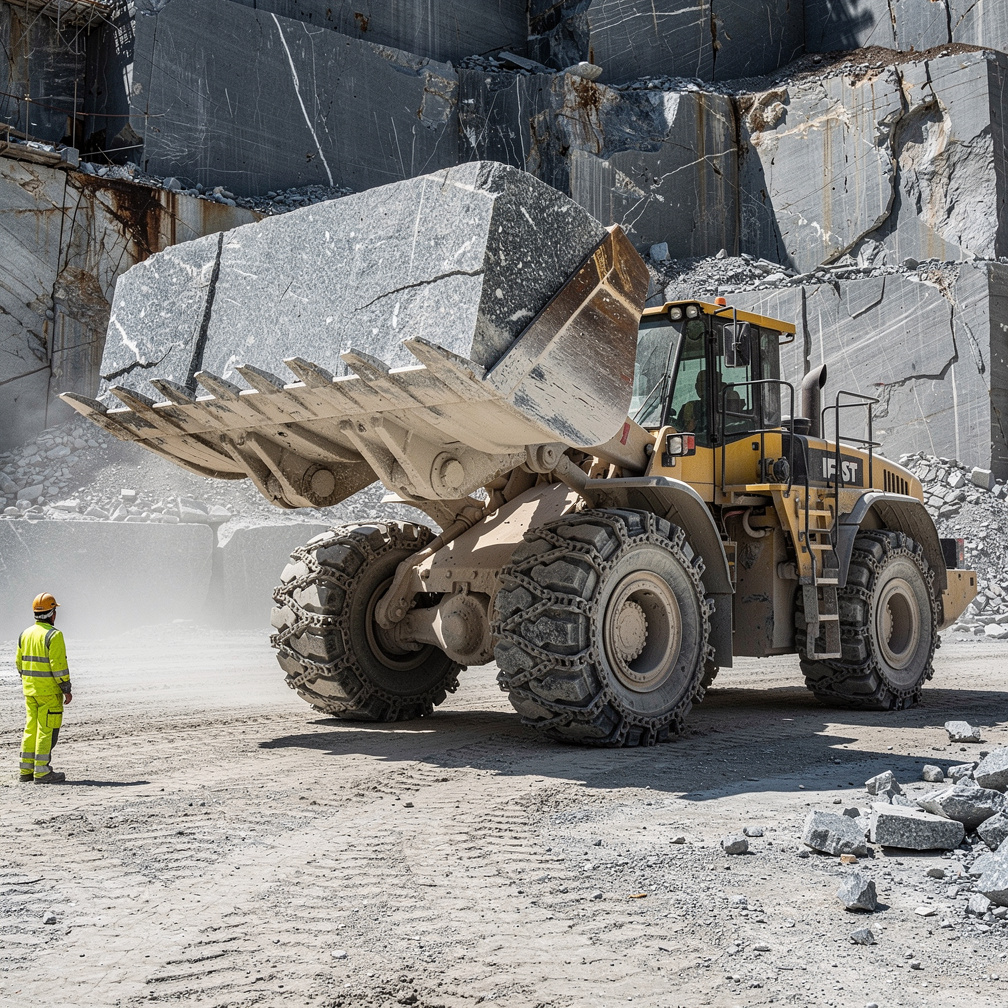
Loaders provide quarries a vital shot in the arm in speed and cleanliness moving rock from one place to another. Wheel loaders, front loaders, and track loaders all shove material from the face to crushers, stockpiles, or trucks, and the right match can alter the entire flow of a site. No matter the size, blast pile loaders are the key to efficient blasting and clean-up, yet many mines still rely on hydraulic excavators for blast material handling.
On a bustling site, that translates to reduced haul cycles, decreased truck idle time, and more efficient use of shift hours. Track loaders typically maneuver in tighter, rougher ground closer to the face, while wheel loaders excel on longer hauls between stockpiles and the plant. For example, a typical layout might include a track loader to sweep the dig face and a medium wheel loader to feed the secondary crusher.
This is where efficiency starts to shine — picking the right loader size and bucket configuration. Small loaders are great for lighter or lower volume work, typically up to around 4.5 tons per bucket. Loaders are the secret weapon of material handling. With dense basalt, a small, heavy-duty rock bucket with wear plates makes sense, even if volume in cubic meters seems modest — the weight hits the limit quickly.
For lighter limestone, a larger general-purpose bucket can shift more volume per pass without overloading. Swapping in specialized attachments, such as high-dump buckets for truck loadout or side-dump buckets for tight plants, allows the same groundwork base machine to stay useful across plant feeding, stockpiling and loadout jobs.
Operator skill then determines if all that potential becomes actual output. Well trained operators reduce spillage by maintaining the correct bucket angle, applying smooth throttle and brake inputs, and driving short, consistent haul paths. Over a 10-hour day, even a 5 second cut per loading cycle adds up to major time savings.
Smart habits such as steering clear of extended idling bouts, shifting into the proper gear range, and designing V-shaped or loop routes can reduce fuel consumption. That fuel drop combined with a reduced person-per-shift count frequently compensates for the expense of a bigger loader. On many sites, tight loader work by itself typically boosts overall material handling efficiency by 10 to 15 percent as long as you mesh it smoothly with haul trucks and crushing plants.
Keeping loaders in shape is non-negotiable for any quarry that runs hard shifts. Daily checks on tyres or tracks, hydraulic hoses, pins, and bucket edges catch play or leaks before they halt the machine mid-shift. Routine lubrication and preventive service intervals, like scheduled oil changes and filter changes, keep long-term repair bills down and uptime steady even in dust, shock, and heat.
A loader that integrates cleanly into the plant schedule, stays matched to the material weight, and receives regular maintenance tends to run with fewer surprise breakdowns and lower life-cycle costs.
9. Haul Trucks: Transporting Materials Out of the Quarry
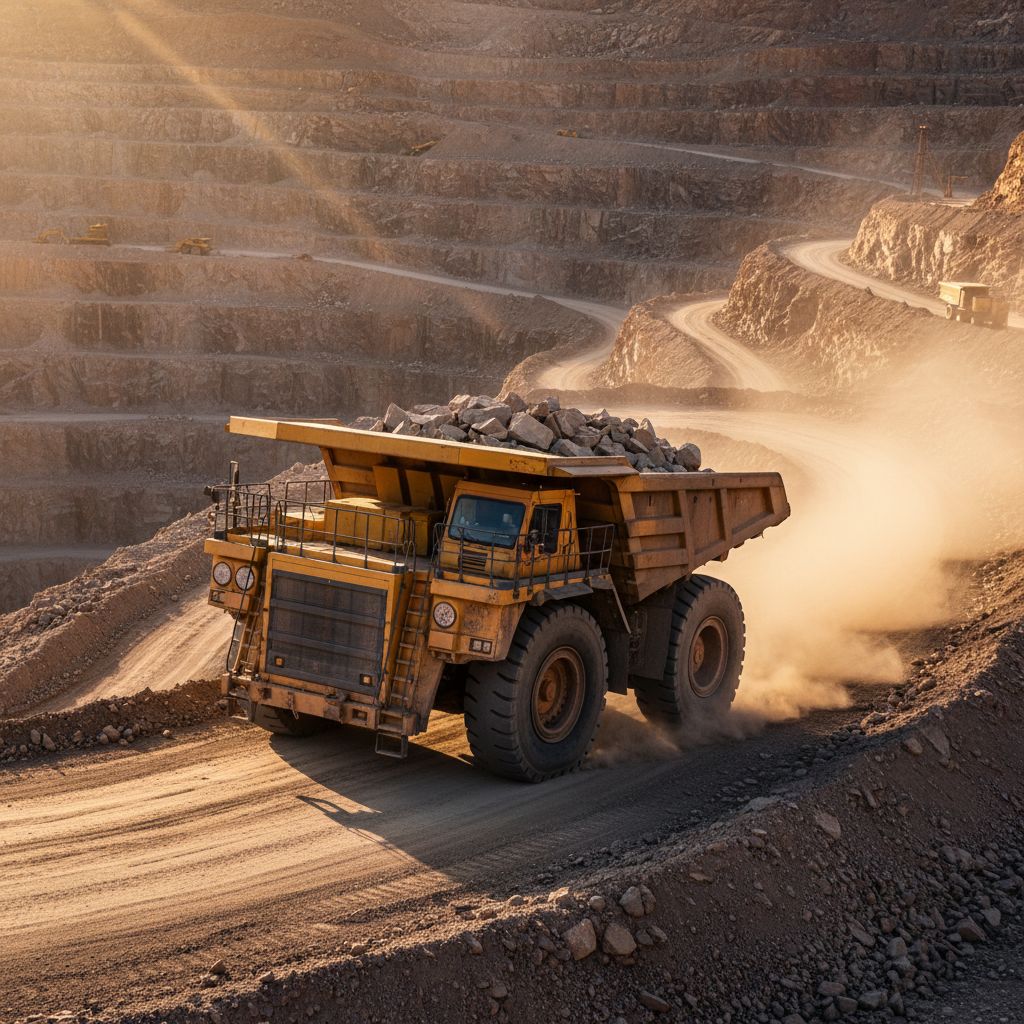
Haul trucks carry massive loads quickly, which means they determine how much a quarry can ship per day. Short “haul trucks” encompasses several varieties, primarily articulated dump trucks and rigid quarry trucks. Articulated dump trucks do well on tight curves, softer terrain and irregular ramps. Rigid quarry trucks fit broad haul roads and high-volume routes with consistent grades.
At a granite quarry, for instance, articulated units may shuttle blasted rock from a narrow pit face to a transfer point, while larger rigid trucks make the longer haul to the main crusher or stockyard. Both endure round trips all day long, and that loop transforms blasted rock into a consistent material stream.
Capacity and design must fit the quarry plan, both the ground and the output target. A 40-tonne truck on a 500 metre haul might work well for a small operation that feeds a single crusher. A big site with a 2,000 t/h target might have 90-t or even 150-t trucks on wide, well-engineered haul roads. Bigger is not better.
A truck that is too large for the ramps, turning circles or bench widths will lose time manoeuvring or running half loaded. On steep grades or rough benches, articulated units with superior traction and flexible frames can maintain speeds where rigid units would fall further behind. Matching truck size to loader bucket size makes a difference. A good rule is to strike a full load in three to five passes so that the loader doesn’t sit idle or waste time ‘topping up’.
Busy quarry roads require strict and clear safety rules for haul truck work. Good practice typically implies designated haul routes, strict right‑of‑way regulations, berms on the edges of roads of sufficient height, grade‑based speed limits, and segregated lanes where possible.
Fluorescent vests, powerful headlights, and backup alarms minimize danger on foggy mornings or late shifts. Most sites now retrofit haul trucks with collision warning or proximity systems, plus GPS trackers that display truck positions to dispatch in real time. In a limestone site with tight switchback ramps, those devices, combined with radio check‑ins at critical junctures, can reduce near‑miss occurrences and protect not only drivers, but smaller support vehicles.
To operate the fleet efficiently, managers monitor haul truck productivity and fuel consumption intensively. Onboard payload scales capture tonnes per trip, cycle times, and idle time per truck. Telematics systems record fuel usage per hour, engine load, and harsh braking.
Over a few weeks, that info can reveal that one route consumes 15% more fuel due to bad road repair or tight turns, or that one truck frequently runs underloaded after a shift change. Easy fixes, like grading ruts, straightening a bend, or modifying loading regulations, reduce fuel cost, a significant portion of total haul cost.
New haul trucks already employ efficient engines, optimized drivelines, and superior tires to reduce fuel consumption. Redundant systems like dual braking circuits and backup hydraulic pumps help keep trucks moving even if one part fails, leading to fewer haul road breakdowns and lost production.
Because haul trucks are wheeled, they can even exit the quarry and travel on public roads where permitted, so a single fleet can transport stone or dirt from a pit to a local construction project with no reloads. A lot of mid-size quarries count on that flexibility, with the same truck making ten or more round trips in a day.
10. Water Pumps: The Unsung Heroes of Dust and Water Management
Water pumps: the unsung heroes! Pumps are behind most clean drilling, safer crushing zones and clear haul roads – even if they don’t look that special at first. While drilling and crushing, sprayed water from pump-fed lines knocks dust out of the air quickly. Workers see more, breathe easier and gear like bearings and seals stay cleaner.
In a tiny granite quarry, a basic skid pump supplying mist bars at the main crusher can cut airborne dust by an enormous margin within minutes. At conveyor transfer points, hoses connected to a small electric pump supply spray nozzles that target the precise drop zones, using just enough water instead of drenching the entire belt.
Quarry pits fill up with rain and groundwater constantly, and pumps keep that manageable. Dewatering pumps pull down the water in pits, so haul trucks still reach the face and dozers hold floor grip. Without solid dewatering, a pit floor becomes soupy, ruts develop, and trucks get stuck, which grinds your entire shift to a halt.
In a few limestone sites, crews operate diesel-powered high head pumps from sumps all the way up to settling ponds on the surface. Smaller submersible pumps nestle in side trenches to drain seepage from walls so you excavate less slough and spend less time on clean-up.
Selection of pump type and size is based on the scale and layout of the quarry, not guesswork. A deep open pit with a high water table can require multi-stage centrifugal units that manage long discharge runs and higher heads. A shallow sand pit with fine slurry can rely on heavy-duty slurry pumps that handle grit without frequent wear ring changes.
Flow rate, total dynamic head, solid content, and power source all matter. A remote bench might require a trailer-mounted diesel pump, whereas a fixed wash plant pairs better with a hardwired electric pump with variable speed drive to tune flow as feed rate swings.
Well-planned care and tracking changes pumps from an expense into silent support. Crews inspect seals, impellers, and hoses on a schedule, record run hours, and replace wear parts preemptively. Simple flow meters and hour counters assist in monitoring water usage against site targets and permits.
Most regions cap draw from their local aquifers, so good logs and clever recycling through settling ponds assist with meeting both regulations and public demand simultaneously.
Conclusion
Quarry work runs on its machines. Every single one has a defined function. Bulldozers open the quarry. Quarrying machines. Drills cut clean and true. Wire saws cut blocks delicately. About: quarrying machines. Excavators and loaders keep rock on the move. Quarrying machines such as crushers and screens mold and screen the finished product. Haul trucks drag the load. Water pumps keep dust and water under control.
A good quarry rig doesn’t pursue flashy equipment. It constructs a close blend that matches the rock, the quarry design and production targets. For a new site or a revamp, map every hop in the flow. Then pair every step with the correct machine. For a deeper look, begin with what feels weak and refine that first.
Frequently Asked Questions
What are the main types of quarrying machines used in a modern quarry?
Quarries generally employ bulldozers, graders, drilling machines, wire saws, excavators, crushers and screening equipment, loaders, haul trucks and water pumps. All of these machines have a role, whether it is land clearing, stone cutting, crushing, sorting or haulage.
How do drilling machines and wire saws work together in quarrying?
Drilling machines punch holes or weaknesses into rock. Wire saws use a diamond-coated cable to saw along pre-marked lines. Combined, they enable accurate quarrying of stone blocks, minimize waste, and increase safety and productivity.
Why are crushers and screening equipment important in a quarry?
Crushers crush big rocks into smaller, usable sizes. Screening machinery subsequently segregates them by size. This allows for uniform product quality, project specification, and minimal waste for construction and industrial applications.
What is the role of bulldozers, graders, and excavators in a quarry?
Bulldozers bulldoze and clear land. Graders are used to shape and maintain haul roads so trucks can safely move around. Excavators dig, lift, and load rock and overburden. Together, they keep quarrying operations efficient and neat.
How do loaders and haul trucks improve quarry efficiency?
Loaders rapidly load crushed or blasted rock into haul trucks or hoppers. Haul trucks follow to move materials from the pit to crushers, stockpiles or processing plants. Their speed, capacity and reliability have a direct impact on output and operating costs.
Why are water pumps important for dust and water management in quarries?
Water pumps manage groundwater, dewater surface water and supply dust suppression systems. They assist in maintaining operating areas dry, minimizing dust generation and increasing visibility and worker health. Good water management aids environmental compliance and safe operations.
What safety factors should be considered when using quarrying machines?
Users should be trained, have transparent processes, and the equipment should be maintained consistently. Critical areas are stable haul roads, safe blasting areas, protected moving parts, safe lifting operations, and dust control. Adhering to standards and inspections mitigates accidents and downtime.